
Job Market Cracks Starting to Show
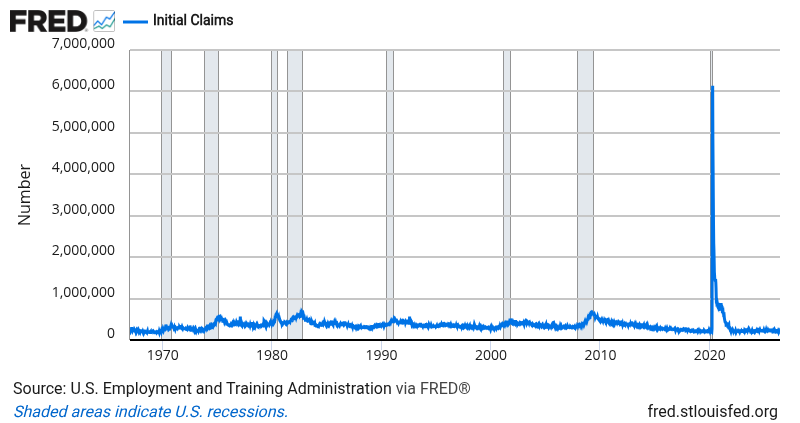
Initial jobless claims jumped 13,000 to 225,000 last week — the highest reading in over a month and a sharp break from the steady downtrend we’ve seen since early April.
Here’s what makes this interesting: we’re not seeing a dramatic spike that screams “recession,” but rather a methodical climb that suggests employers are getting more cautious about layoffs. Claims have risen in four of the past five weeks, moving from 190,000 in late April to 225,000 now. That’s a 35,000 increase — small in absolute terms, but meaningful when the trend has been your friend for months.
This fits with other signals suggesting the job market is cooling from red-hot to merely warm. We’re seeing fewer job openings, slower hiring, and now slightly more people getting let go. It’s the kind of gradual deceleration that happens when businesses start prioritizing profit margins over aggressive expansion. Companies aren’t panicking and slashing payrolls — they’re just being more selective about who stays when budgets get tight.
Historically, when jobless claims start trending higher from very low levels, it signals we’re moving from the “goldilocks” phase of an expansion toward something more uncertain. The labor market typically leads the broader economy by several months, so this bears watching.
Many professional investors view rising claims as a reason to rotate toward more defensive positioning — think dividend-paying stocks over high-growth names, or shorter-duration bonds over longer-term paper. The logic: if the job market softens, consumer spending follows, and that hits growth-sensitive assets first.
Bottom Line: The job market isn’t broken, but the cracks are starting to show. The question now is whether this is a healthy cooling or the start of something bigger.
Source: Federal Reserve Economic Data (FRED)
ON1010.com provides economic education for investors. Nothing here is investment advice. Always consult a qualified financial advisor before making investment decisions.
Free Research
The economy moves fast. We make sure you move faster.
Economic data, policy shifts, and market signals — delivered to your inbox.
Subscribe Free