
Wage Growth Stays Modest Despite Energy Shock
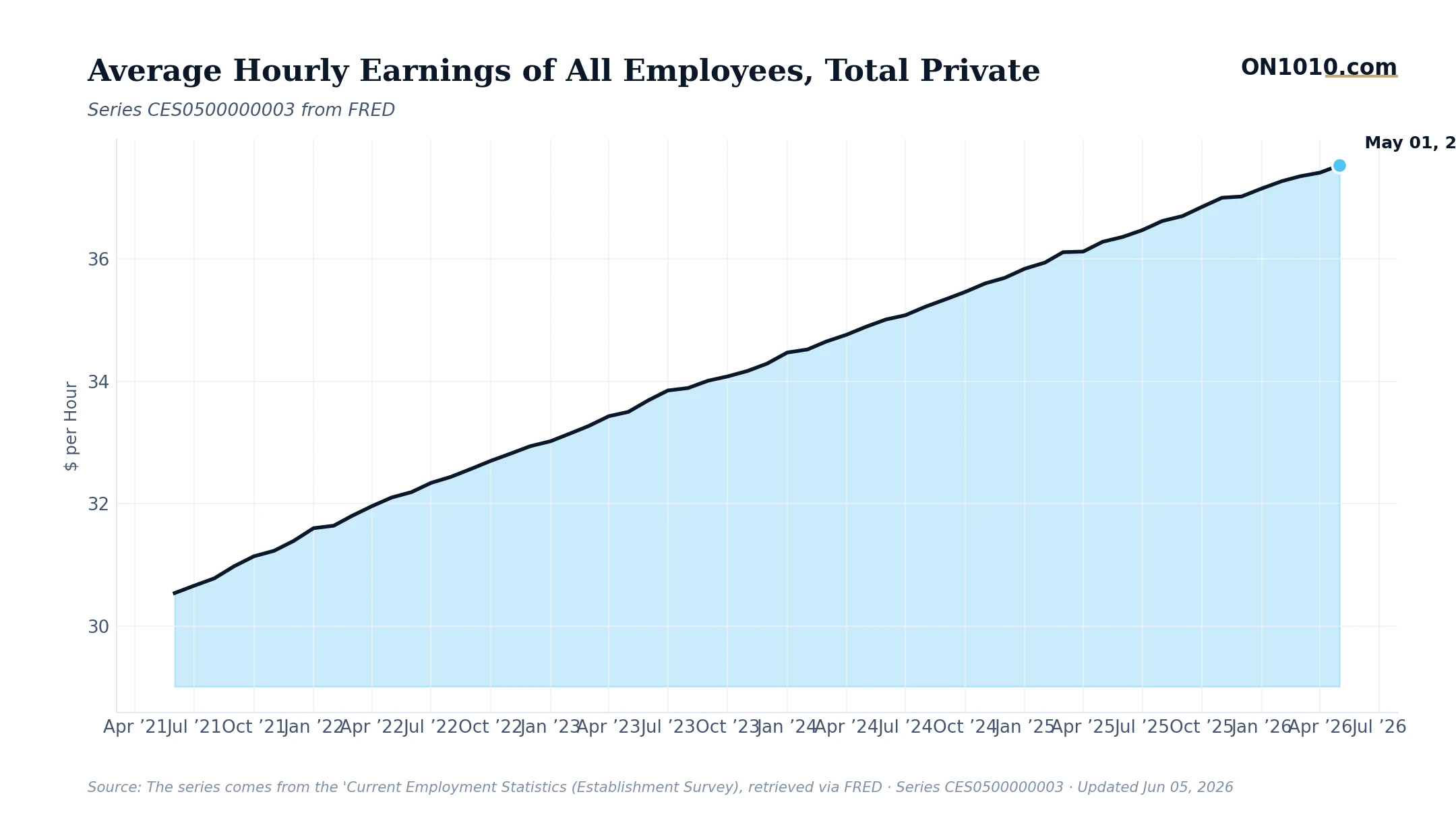
Average hourly earnings rose 0.32% in May to $37.53, marking the sixth consecutive month of steady but unspectacular wage gains. The 2.91% annual pace suggests workers are getting raises, but not the kind that typically accompanies tight labor markets or runaway inflation.
Here’s what’s notable: wage growth has actually cooled slightly from earlier in the year, even as the Strait of Hormuz closure sent oil from $66 to $95 and reshaped the inflation outlook. May’s 0.32% monthly gain compares to 0.35% in March and 0.32% in February. That 2.91% annual rate is well below the 4-5% peaks we saw during the post-COVID hiring surge, and it’s barely ahead of the Fed’s 2% inflation target that energy prices are now threatening.
This creates an interesting dynamic for the Federal Reserve. Wage growth typically leads consumer price inflation by several months, so the modest pace here suggests underlying price pressures remain contained even as energy costs spike. But it also means workers aren’t getting the kind of pay bumps that would help them weather higher gas and heating bills. Historically, when energy shocks hit during periods of moderate wage growth, consumers tend to cut spending in other areas rather than demand bigger raises.
The question for business leaders: are we seeing wage restraint because companies expect the energy shock to squeeze margins, or because the labor market has genuinely loosened? In past cycles, employers who maintained competitive pay during energy-driven inflation often gained market share as competitors cut back on talent investment.
Bottom Line: Workers are getting steady but modest raises just as their costs are spiking. That’s a recipe for cautious consumer spending ahead.
Source: Federal Reserve Economic Data (FRED)
ON1010 Research is an independent publisher of economic education and is not a registered investment adviser, broker-dealer, or investment company. This content is for educational and informational purposes only and is not investment advice or a recommendation to buy, sell, or hold any security. Published under the publisher exemption recognized by Section 202(a)(11)(D) of the Investment Advisers Act of 1940 (Lowe v. SEC). Always consult a qualified financial professional before making any financial decision.
Free Research
The economy moves fast. We make sure you move faster.
Economic data, policy shifts, and market signals — delivered to your inbox.
Subscribe Free