
May Inflation Reading Could Signal Fed’s Next Challenge
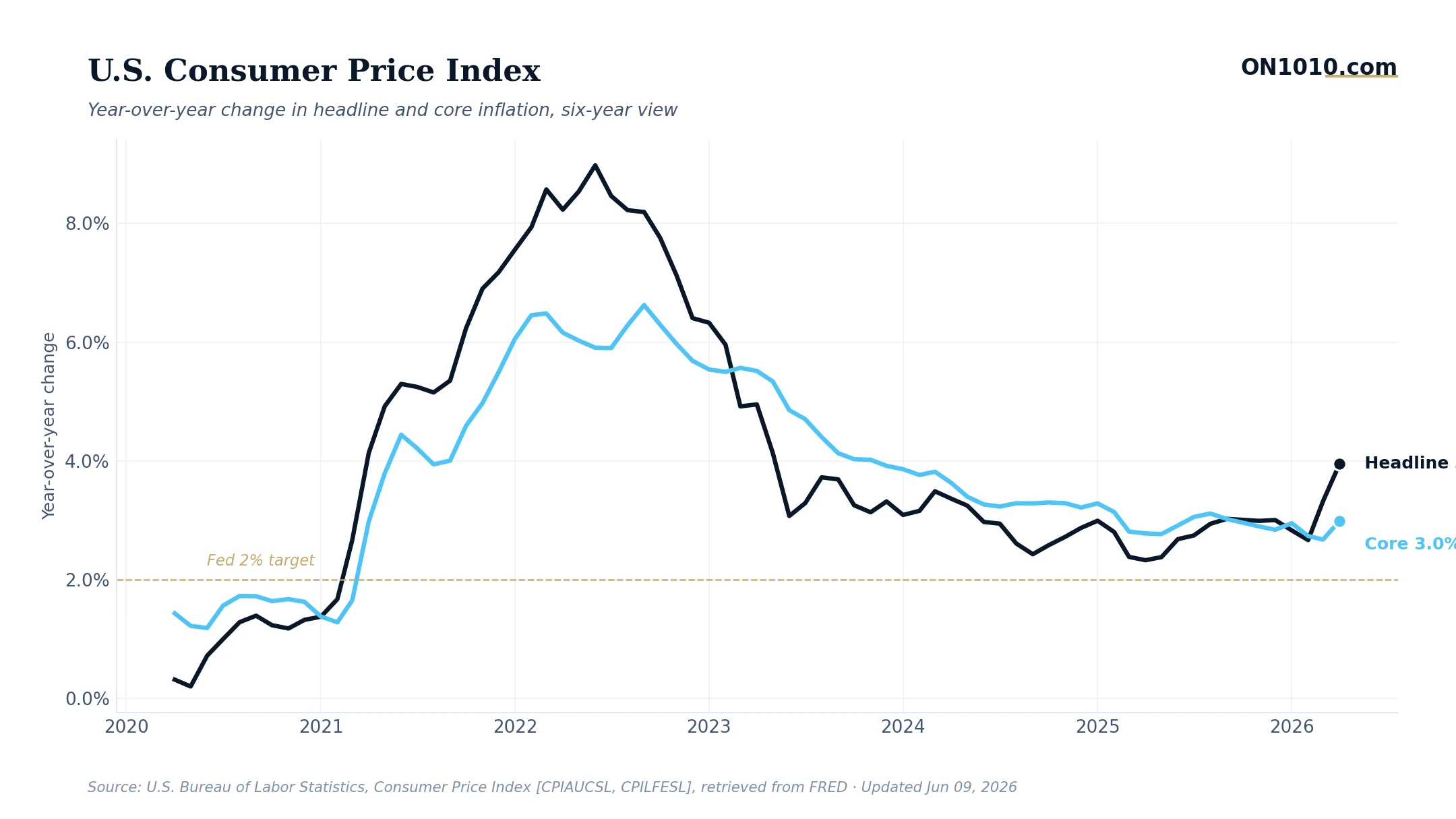
According to CNBC, Wall Street expects Wednesday’s Consumer Price Index to show inflation running at 4.2% annually for May. But here’s what makes this number particularly revealing: it comes as the Federal Reserve faces a completely different energy landscape than just three months ago.
The consensus forecast sits uncomfortably high against the backdrop of the Strait of Hormuz crisis. With oil jumping from $66 to $95 since the strait closed in February, every sustained 10% oil premium historically adds roughly 0.6% to CPI. That math suggests the May reading could surprise higher, potentially printing with a 1-handle monthly gain. The energy shock that began with the military crisis has already forced the Fed to pause rate cuts, and persistent above-target inflation would cement that higher-for-longer stance.
What’s particularly interesting is the timing disconnect. May’s data reflects an economy still adjusting to the new energy reality, but businesses have had months now to pass through costs. Corporate margins in energy-intensive sectors face compression, while companies competing against Chinese manufacturers, who benefit from 90% domestic energy sources, see their cost disadvantage widen further.
Historically, investors have used inflation prints above 4% as signals to rotate away from duration risk and toward sectors that can pass through costs. The question worth considering is whether this energy-driven inflation spike represents a temporary shock that fades as strategic reserves get deployed, or a structural shift that keeps the Fed sidelined longer than markets expect.
Bottom Line: If May CPI confirms that energy shocks are feeding through to core prices, the Fed’s pause could stretch well into 2026, making this more than just another data point.
Read more: CNBC Economy
ON1010 Research is an independent publisher of economic education and is not a registered investment adviser, broker-dealer, or investment company. This content is for educational and informational purposes only and is not investment advice or a recommendation to buy, sell, or hold any security. Published under the publisher exemption recognized by Section 202(a)(11)(D) of the Investment Advisers Act of 1940 (Lowe v. SEC). Always consult a qualified financial professional before making any financial decision.
Free Research
The economy moves fast. We make sure you move faster.
Economic data, policy shifts, and market signals — delivered to your inbox.
Subscribe Free