
Inflation Holds Steady at 3.7% — But the Monthly Pace Tells a Different Story
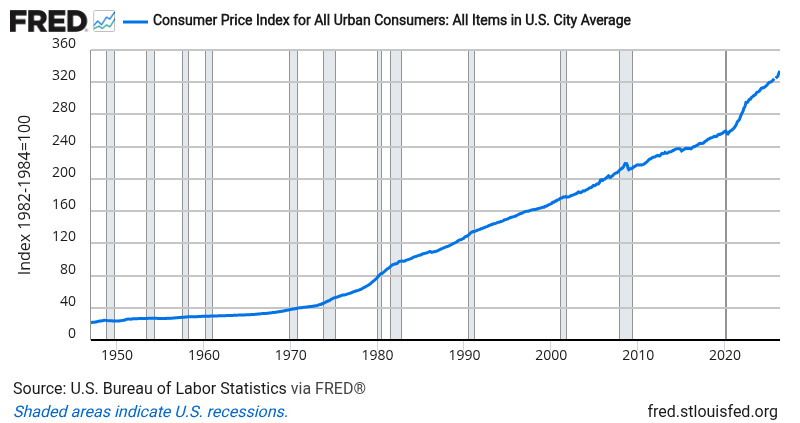
Consumer prices rose 0.47% in May, marking the third consecutive month of elevated monthly gains and keeping the annual inflation rate stuck at 3.67% — nearly double the Fed’s target.
Here’s what’s interesting: while the year-over-year number looks stable, the month-to-month trend is quietly accelerating. May’s 0.47% monthly gain follows 0.64% in April and 0.86% in March. That’s an annualized pace of roughly 5.6% over the past quarter — well above what the Fed wants to see. The apparent “stability” in annual inflation is masking some concerning momentum underneath.
This creates a puzzle for Fed officials. The central bank has been hoping that inflation would naturally drift back toward 2% as pandemic distortions fade. But three months of persistent monthly pressure suggests something more structural may be happening — whether it’s sticky service sector wages, housing costs, or demand that’s simply running too hot relative to the economy’s capacity to produce.
What This Means for Your Portfolio: Many professional investors are watching this dynamic closely because it changes the Fed’s calculus. When monthly inflation runs consistently above target, historically the central bank has had to stay more aggressive with interest rates for longer. This type of environment has traditionally favored shorter-duration bonds over longer ones, and has often led investors to consider inflation-protected securities and real assets that can benefit from sustained price pressures.
Bottom Line: The annual inflation rate may look stable, but the monthly trend suggests we’re not out of the woods yet. The question now is whether this momentum continues — and how long the Fed will tolerate it before changing course.
Source: Federal Reserve Economic Data (FRED)
ON1010.com provides economic education for investors. Nothing here is investment advice. Always consult a qualified financial advisor before making investment decisions.
Free Research
The economy moves fast. We make sure you move faster.
Economic data, policy shifts, and market signals — delivered to your inbox.
Subscribe Free