
Fed Funds Rate Locked at 3.62% as Energy Crisis Puts Rate Cuts on Ice
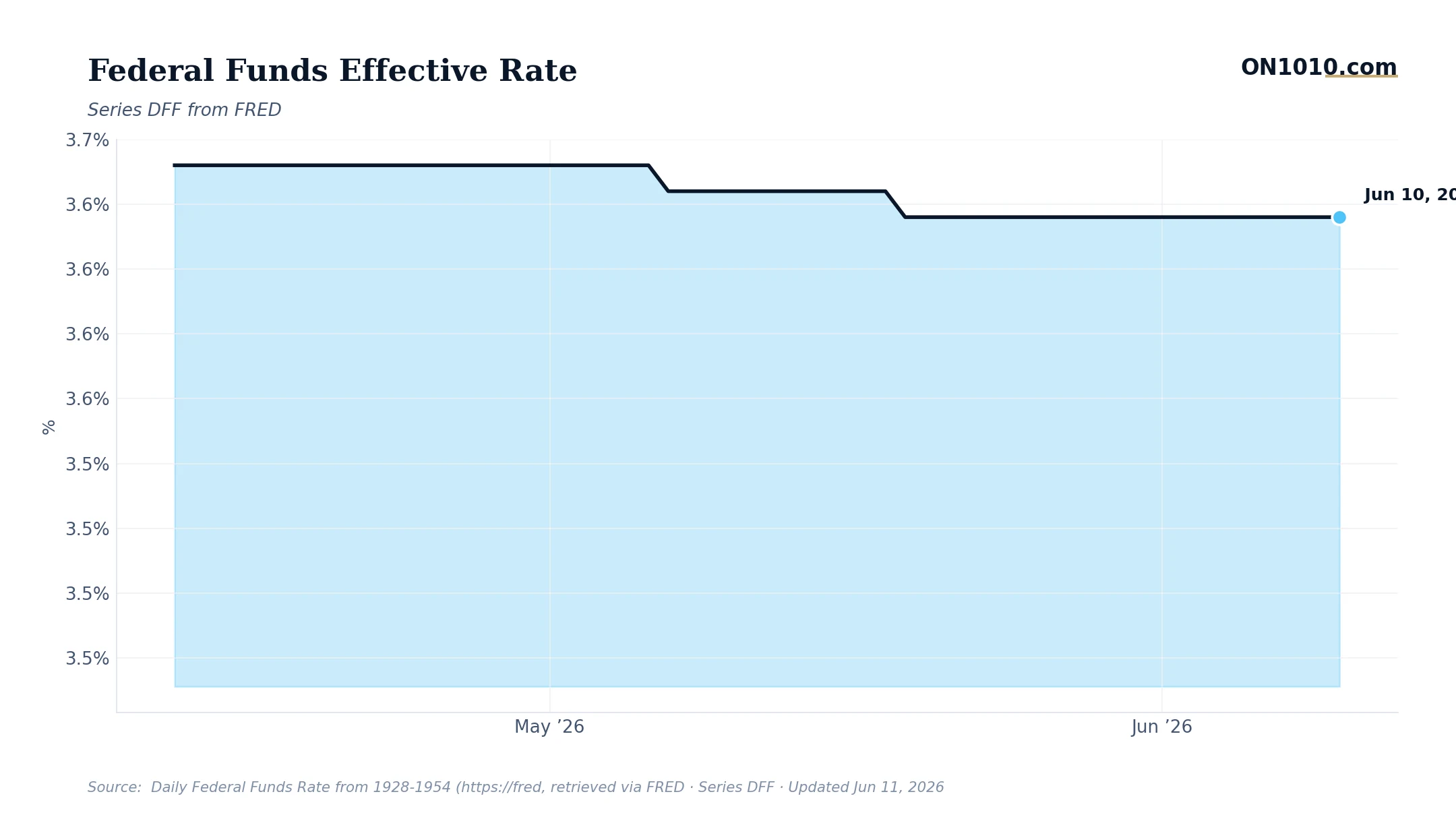
The effective federal funds rate has held steady at 3.62% for six straight days, a level that would have seemed surprisingly high just months ago but now looks sticky as the Fed grapples with oil-driven inflation pressures. Zero movement in the overnight lending rate reflects a central bank that has completely shelved any thoughts of easing.
This isn’t just another pause between rate adjustments. The Strait of Hormuz closure since late February pushed crude from $66 to $95, creating a new inflation reality that has forced the Fed to abandon its dovish pivot. Every sustained 10% oil premium historically adds about 0.6% to the Consumer Price Index, which means monthly inflation readings could soon print with a 1-handle. When energy shocks hit this hard, central banks typically hold rates higher for longer rather than risk an inflationary spiral.
The 3.62% level puts the Fed in a holding pattern that echoes past energy crises. During the 1979 oil shock, the Fed initially tried to thread the needle between growth concerns and inflation fears before ultimately accepting that higher rates were the price of credibility. Historically, this type of external inflation shock has meant that monetary policy stays restrictive until either energy prices normalize or the economy adjusts to the new price level.
Bottom Line: A frozen fed funds rate isn’t neutral policy when inflation is accelerating. The longer oil stays near $95, the more this 3.62% rate starts to look accommodative rather than restrictive.
Source: Federal Reserve Economic Data (FRED)
ON1010 Research is an independent publisher of economic education and is not a registered investment adviser, broker-dealer, or investment company. This content is for educational and informational purposes only and is not investment advice or a recommendation to buy, sell, or hold any security. Published under the publisher exemption recognized by Section 202(a)(11)(D) of the Investment Advisers Act of 1940 (Lowe v. SEC). Always consult a qualified financial professional before making any financial decision.
Free Research
The economy moves fast. We make sure you move faster.
Economic data, policy shifts, and market signals — delivered to your inbox.
Subscribe Free