
2-Year Yields Stuck at 4.13%: The Fed Pause That Speaks Volumes
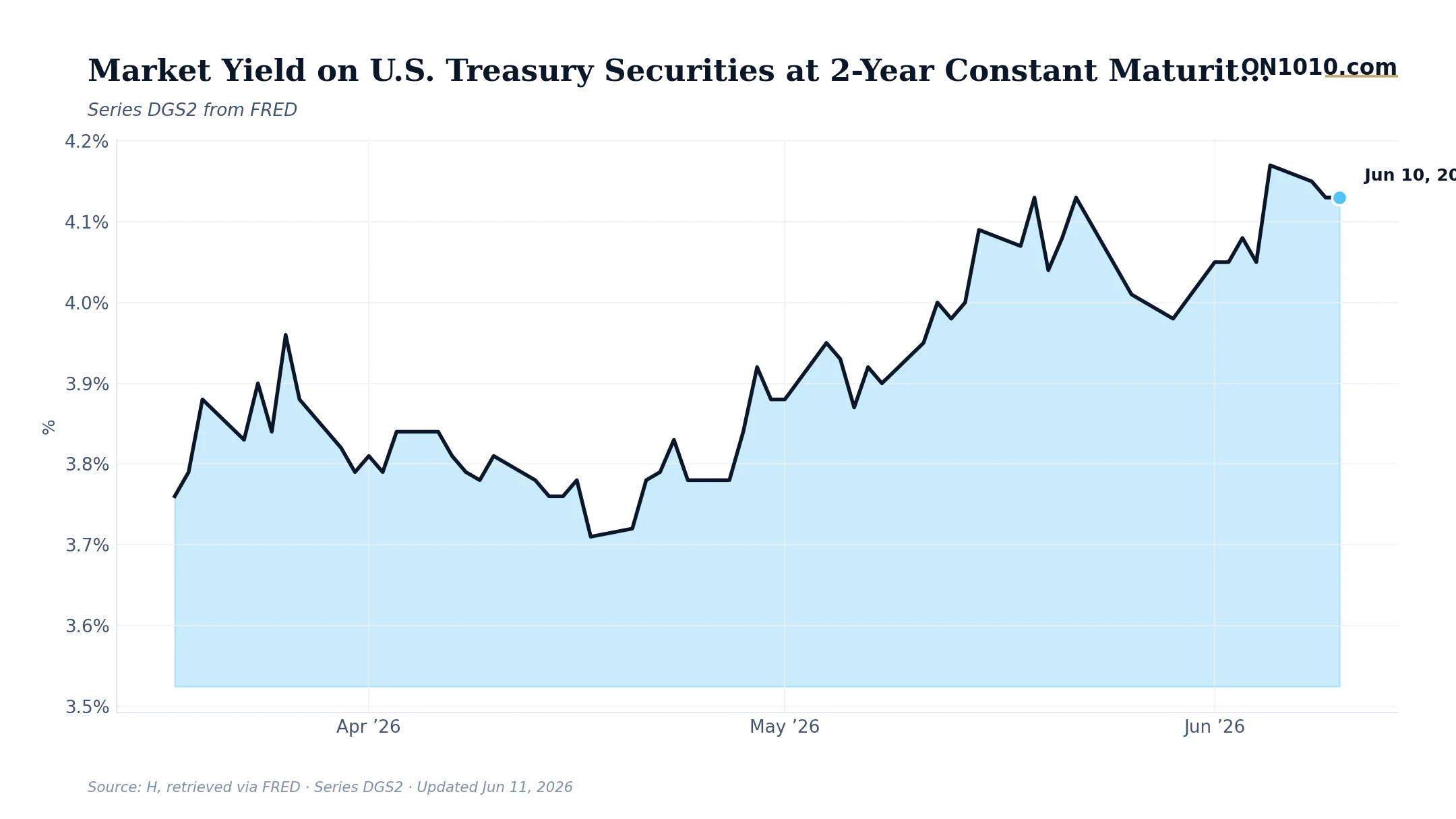
The 2-year Treasury yield has been glued to 4.13% for two straight days, dead flat after a week of small declines from 4.17%. In a market where bond traders usually move on every whisper of Fed policy, this kind of stillness tells a story. The market has priced in exactly what it expects: the Fed staying put, indefinitely.
This isn’t the calm of confidence. It’s the calm of resignation. Bond markets had been pricing in rate cuts as recently as a few months ago, but the Strait of Hormuz closure and resulting oil spike from $66 to $95 changed everything. When energy shocks hit, central banks can’t ease without risking an inflation spiral. The 2-year yield reflects what traders now see as reality: higher-for-longer isn’t a policy choice anymore, it’s an economic necessity.
The flatness in yields also signals something more subtle about market positioning. When the 2-year barely moves day-to-day, it usually means big players have already adjusted their books and aren’t fighting the Fed anymore. Compare this to the wild swings we saw in early 2022 when markets kept betting against Fed hawkishness and getting burned. Now, the market and the Fed are finally in sync, just not where anyone wanted to be.
Historically, this type of yield stability at elevated levels has marked the mature phase of tightening cycles. The question for business leaders and investors is whether this represents a sustainable equilibrium or the calm before the next move. In past cycles, prolonged periods of stable short-term rates have often preceded either significant easing (if the economy cracks) or significant tightening (if inflation proves stickier than expected).
Bottom Line: When the 2-year yield stops moving, it’s usually because the big money has made its bet. Right now, that bet is on a Fed that can’t cut rates even if it wants to, and a market that’s stopped hoping it will.
Source: Federal Reserve Economic Data (FRED)
ON1010 Research is an independent publisher of economic education and is not a registered investment adviser, broker-dealer, or investment company. This content is for educational and informational purposes only and is not investment advice or a recommendation to buy, sell, or hold any security. Published under the publisher exemption recognized by Section 202(a)(11)(D) of the Investment Advisers Act of 1940 (Lowe v. SEC). Always consult a qualified financial professional before making any financial decision.
Free Research
The economy moves fast. We make sure you move faster.
Economic data, policy shifts, and market signals — delivered to your inbox.
Subscribe Free