
Inflation Expectations Ease as Energy Shock Fears Moderate
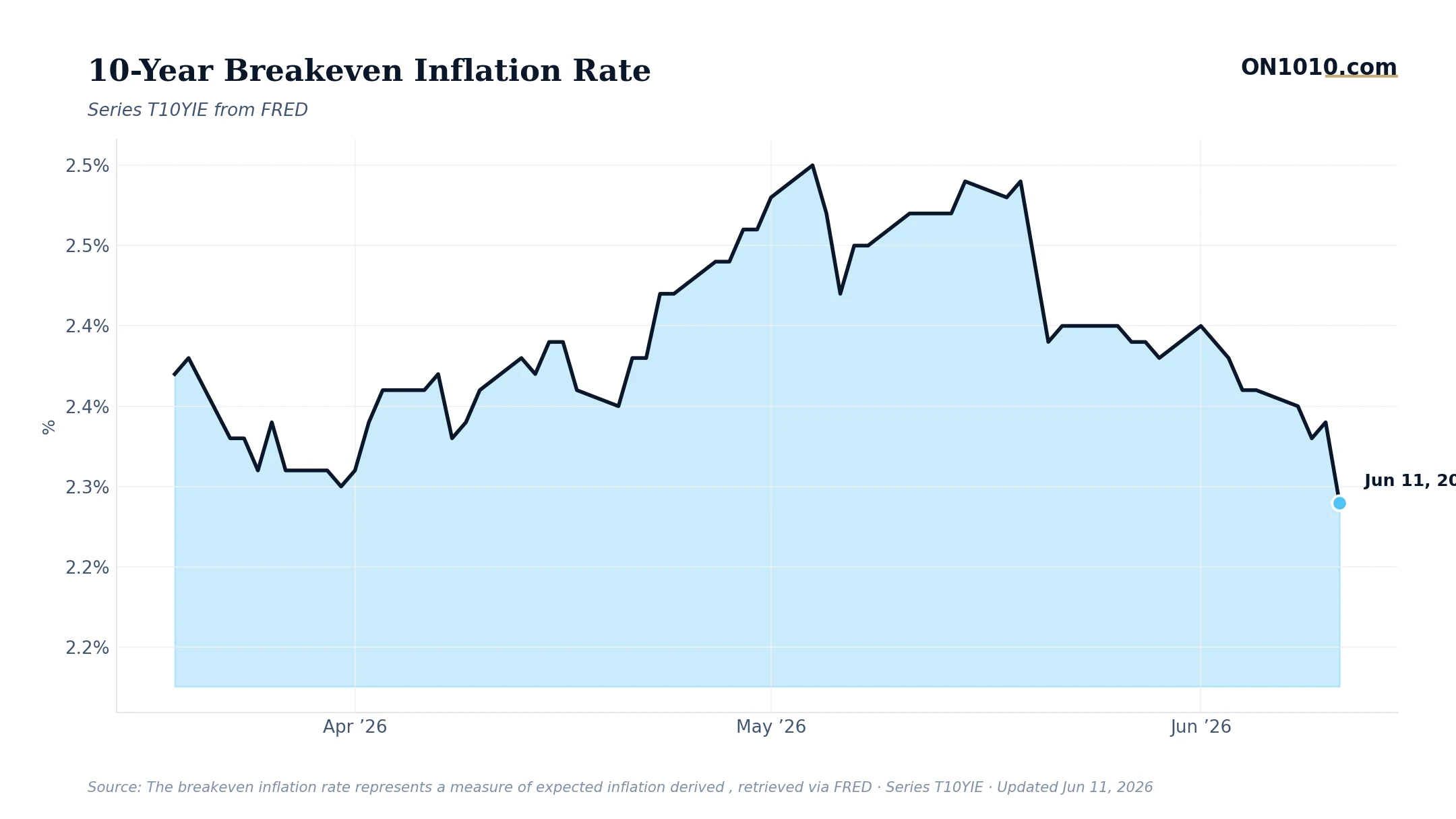
The bond market is sending a clear signal: the inflation panic may be overdone. Ten-year breakeven inflation expectations dropped to 2.29% yesterday, down from 2.34% earlier in the week and sliding steadily from the 2.36% level we saw last Friday. That’s a meaningful move in a market that typically moves in fractions.
This pullback comes as markets digest whether the energy shock from the Strait of Hormuz closure will create sustained inflation or just a temporary spike. With oil holding near $95 after surging from $66 pre-crisis, investors initially feared a repeat of 1970s-style embedded inflation. But the breakeven curve suggests bond traders are betting this stays transitory, especially with strategic petroleum reserves releasing 400 million barrels and the US positioned as a net energy exporter rather than victim.
The bigger story is what 2.29% represents: still above the Fed’s 2% target, but well below the 3-4% levels that would signal genuine inflation expectations becoming unanchored. Historically, when breakevens retreat after an energy shock, it has meant markets see central banks maintaining credibility and underlying economic fundamentals staying intact. The question is whether this confidence is justified given the ongoing military crisis in the Gulf.
In past cycles, declining breakevens during energy crises have provided cover for businesses to maintain investment plans and for the Fed to avoid aggressive tightening. But they’ve also sometimes reflected growth fears rather than inflation confidence, and with defensive sectors outperforming by 3.4 percentage points recently, that interpretation deserves consideration.
Bottom Line: Markets are betting the energy shock creates a growth headwind, not an inflation spiral. The test comes in how long Iran keeps the Strait closed and whether that 2.29% level holds.
Source: Federal Reserve Economic Data (FRED)
ON1010 Research is an independent publisher of economic education and is not a registered investment adviser, broker-dealer, or investment company. This content is for educational and informational purposes only and is not investment advice or a recommendation to buy, sell, or hold any security. Published under the publisher exemption recognized by Section 202(a)(11)(D) of the Investment Advisers Act of 1940 (Lowe v. SEC). Always consult a qualified financial professional before making any financial decision.
Free Research
The economy moves fast. We make sure you move faster.
Economic data, policy shifts, and market signals — delivered to your inbox.
Subscribe Free