
Treasury Yields Pull Back as Bond Market Searches for Direction
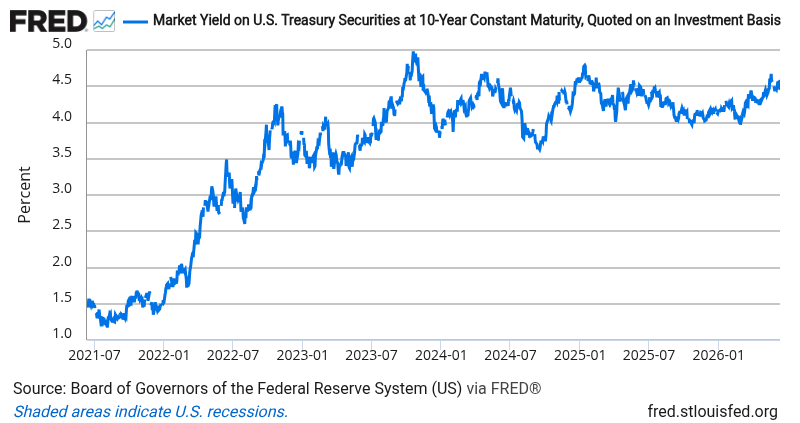
The 10-year Treasury yield dropped 10 basis points to 4.45% yesterday after bouncing around the mid-4.5% range all week. While that might sound like noise, it’s actually the market wrestling with a fundamental question: are we looking at a temporary pause in the post-election bond selloff, or something more meaningful?
Here’s what makes this interesting. Corporate profit margins have been surprisingly resilient this quarter, which typically supports higher yields as investors demand more compensation for holding bonds when stocks look attractive. But productivity data has been mixed, and business investment decisions seem to be on hold while companies wait for clearer policy signals. When capital allocation stalls, it usually takes pressure off rates.
The bigger picture? We’re in that awkward phase where the bond market is trying to price in structural changes it doesn’t fully understand yet. Post-2020 economic patterns don’t always follow the old playbook, and investors are realizing that historical relationships between growth, inflation, and rates might need recalibrating.
In this type of environment, many professional investors focus on duration risk and sector rotation rather than making big directional bets. When rates are volatile in the mid-4% range, it often pays to think about what works if yields stay elevated versus what works if they fall back toward 4%. Historically, this kind of range-bound uncertainty has led investors to favor shorter-duration assets and companies with strong pricing power.
Bottom Line: The bond market is asking the right questions but doesn’t have enough data for confident answers yet. Watch whether yields can hold below 4.5% or if we’re just seeing another head-fake before the next leg higher.
Source: Federal Reserve Economic Data (FRED)
ON1010.com provides economic education for investors. Nothing here is investment advice. Always consult a qualified financial advisor before making investment decisions.
Free Research
The economy moves fast. We make sure you move faster.
Economic data, policy shifts, and market signals — delivered to your inbox.
Subscribe Free