
Market’s Inflation Expectations Hold Steady Despite Oil Shock
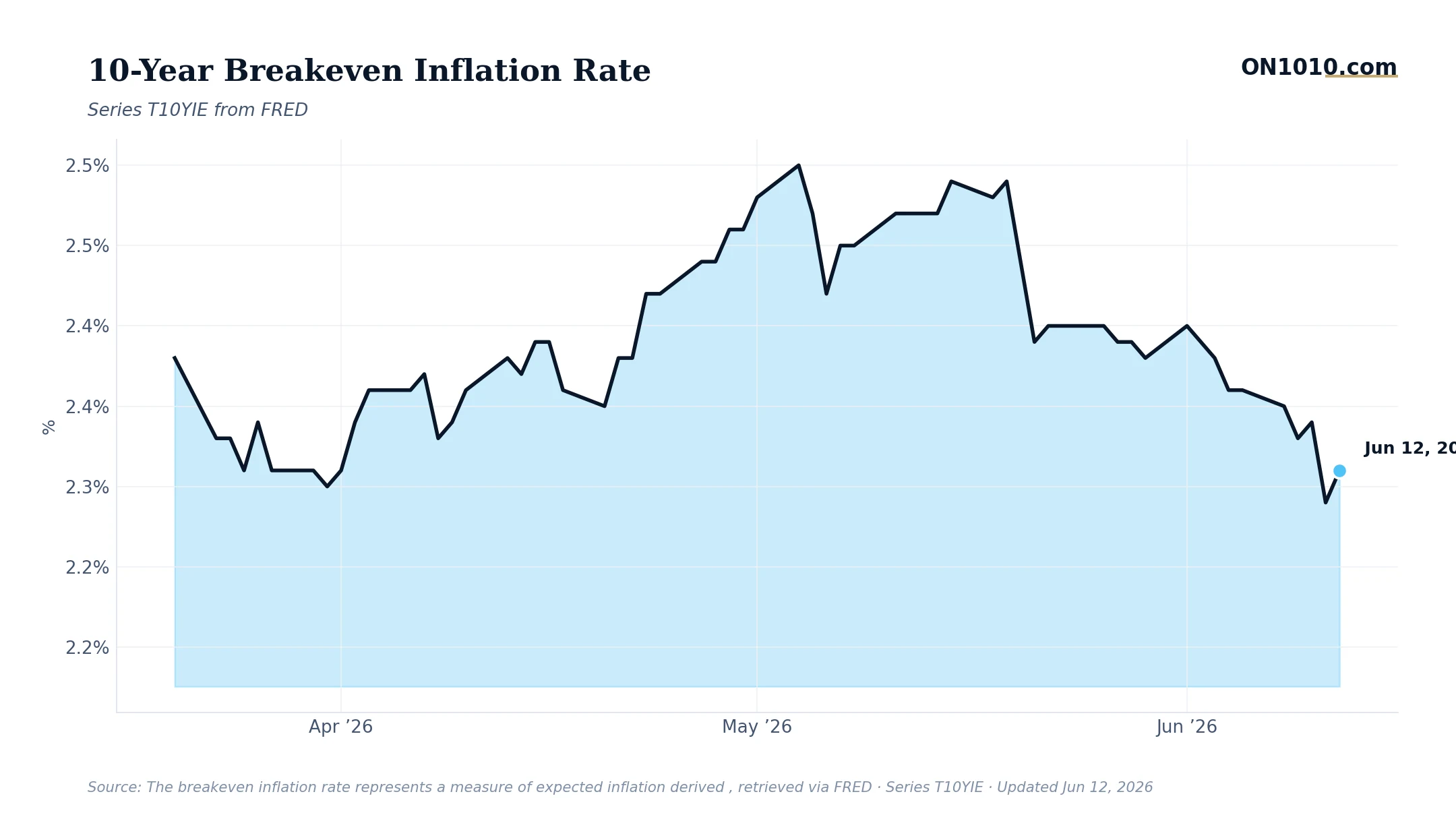
The 10-year breakeven inflation rate ticked up to 2.31% Thursday, a modest 0.02 percentage point increase that suggests bond markets aren’t panicking about long-term price pressures despite oil trading near $95 following the Strait of Hormuz closure. The reading sits comfortably within the 2.29% to 2.36% range we’ve seen over the past week.
Here’s what’s remarkable: with crude oil up 44% from pre-crisis levels, inflation expectations are barely budging. This tells us bond investors see the current energy shock as a temporary disruption, not a permanent shift in the inflation regime. The 10-year breakeven is essentially pricing in that the Fed’s 2% target remains credible over the long haul, even with monthly CPI likely to print with a 1-handle in coming months.
This split between near-term energy inflation and long-term expectations mirrors what we saw during past oil shocks. The market is betting that once the Hormuz situation resolves and strategic petroleum reserves finish flowing into the market, energy prices will normalize and take headline inflation back down with them. It’s a test of whether today’s Fed has the credibility that Volcker built in the 1980s.
Historically, this type of stability in long-term breakevens during energy crises has been a positive signal for asset allocators. It suggests the market doesn’t expect the Fed to overreact with aggressive tightening that could trigger a recession. Past cycles show that when breakevens stay anchored during supply shocks, the economic expansion typically continues once the shock fades.
Bottom Line: Bond markets are betting this oil crisis stays temporary and the Fed keeps its inflation credibility intact. The real test comes when we see whether that confidence holds if the Strait stays closed much longer.
Source: Federal Reserve Economic Data (FRED)
ON1010 Research is an independent publisher of economic education and is not a registered investment adviser, broker-dealer, or investment company. This content is for educational and informational purposes only and is not investment advice or a recommendation to buy, sell, or hold any security. Published under the publisher exemption recognized by Section 202(a)(11)(D) of the Investment Advisers Act of 1940 (Lowe v. SEC). Always consult a qualified financial professional before making any financial decision.
Free Research
The economy moves fast. We make sure you move faster.
Economic data, policy shifts, and market signals — delivered to your inbox.
Subscribe Free