
The Yield Curve Just Stopped Flashing Red. Here’s What That Actually Means.
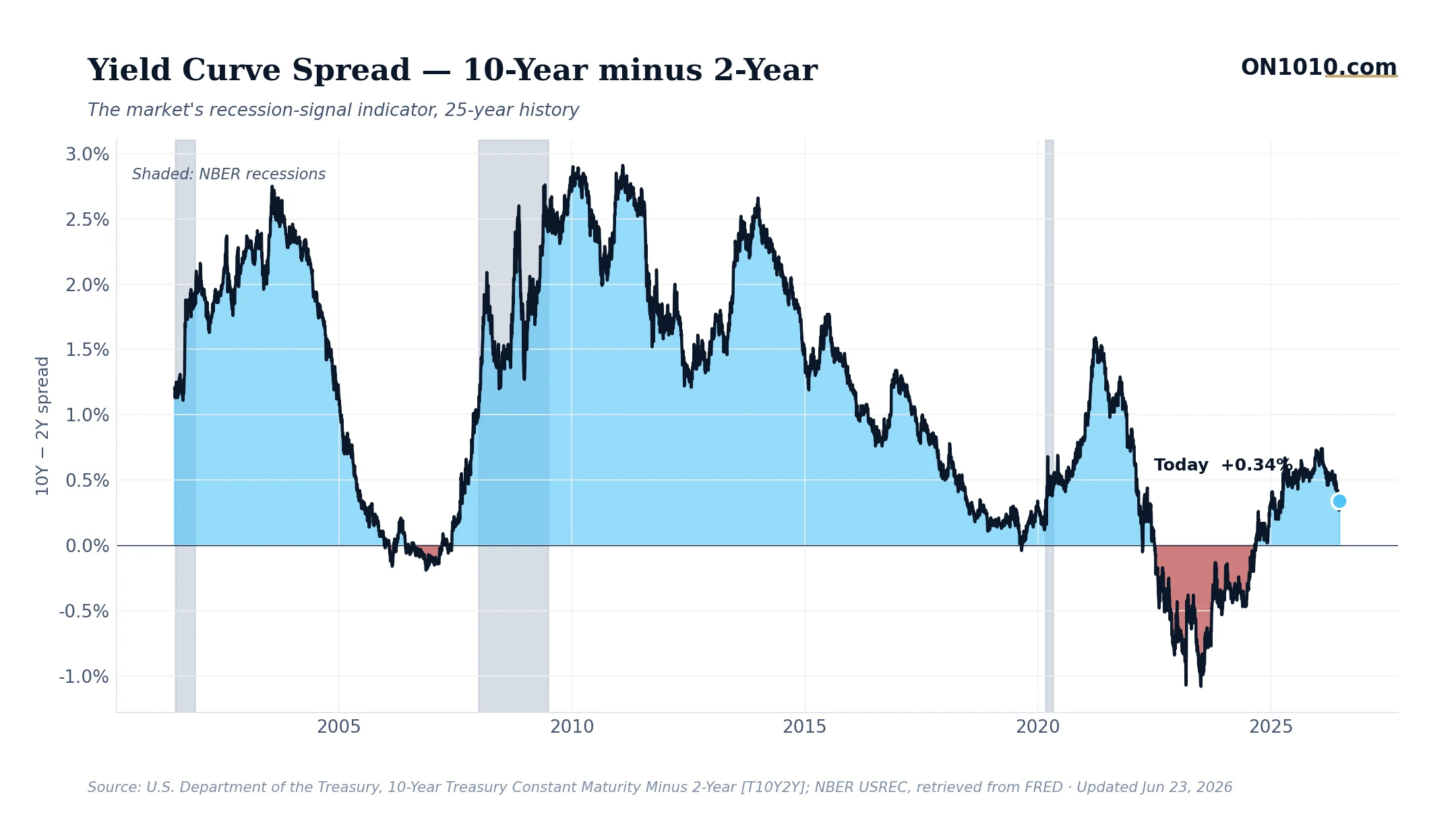
The gap between 10-year and 2-year Treasury yields moved to 0.34% on June 23, up from 0.27% the day before. That’s a small number, but the direction matters: the curve has been un-inverting for months, and it’s now sitting in positive territory.
For context, this spread spent most of 2022 through 2024 deeply inverted, meaning short-term yields were higher than long-term ones. That configuration has preceded every U.S. recession since the 1970s. A positive spread suggests the bond market is no longer pricing in the same level of near-term economic stress.
But here’s the tension. The curve is healing just as the macro backdrop gets more complicated. The Strait of Hormuz has been closed since late February following U.S.-Israel strikes on Iran. That’s an active military crisis, not a passing episode, and oil has already repriced sharply in response. The Fed has paused rate cuts. Inflation is at risk of re-accelerating. A steepening curve in this environment could reflect genuine growth optimism, or it could reflect a bond market bracing for higher inflation to persist at the long end rather than pricing in recovery.
Historically, the period right after a curve un-inverts has been a critical one to watch. In past cycles, the steepening phase that follows a deep inversion has sometimes marked the beginning of genuine recoveries. Other times, it preceded the sharpest leg of a slowdown. The direction was the same; the underlying cause was different. The question always worth asking: is this steepening driven by falling short rates (a growth signal) or by rising long rates (an inflation signal)?
Bottom Line: The yield curve returning to positive territory is genuinely constructive, but with energy prices elevated and rate cuts off the table, the reason behind the steepening deserves as much attention as the spread itself.
Source: Federal Reserve Economic Data (FRED)
ON1010 Research is an independent publisher of economic education and is not a registered investment adviser, broker-dealer, or investment company. This content is for educational and informational purposes only and is not investment advice or a recommendation to buy, sell, or hold any security. Published under the publisher exemption recognized by Section 202(a)(11)(D) of the Investment Advisers Act of 1940 (Lowe v. SEC). Always consult a qualified financial professional before making any financial decision.
Free Research
The economy moves fast. We make sure you move faster.
Economic data, policy shifts, and market signals — delivered to your inbox.
Subscribe Free