
The Fed Is Holding Steady. The Market Isn’t Buying the Calm.
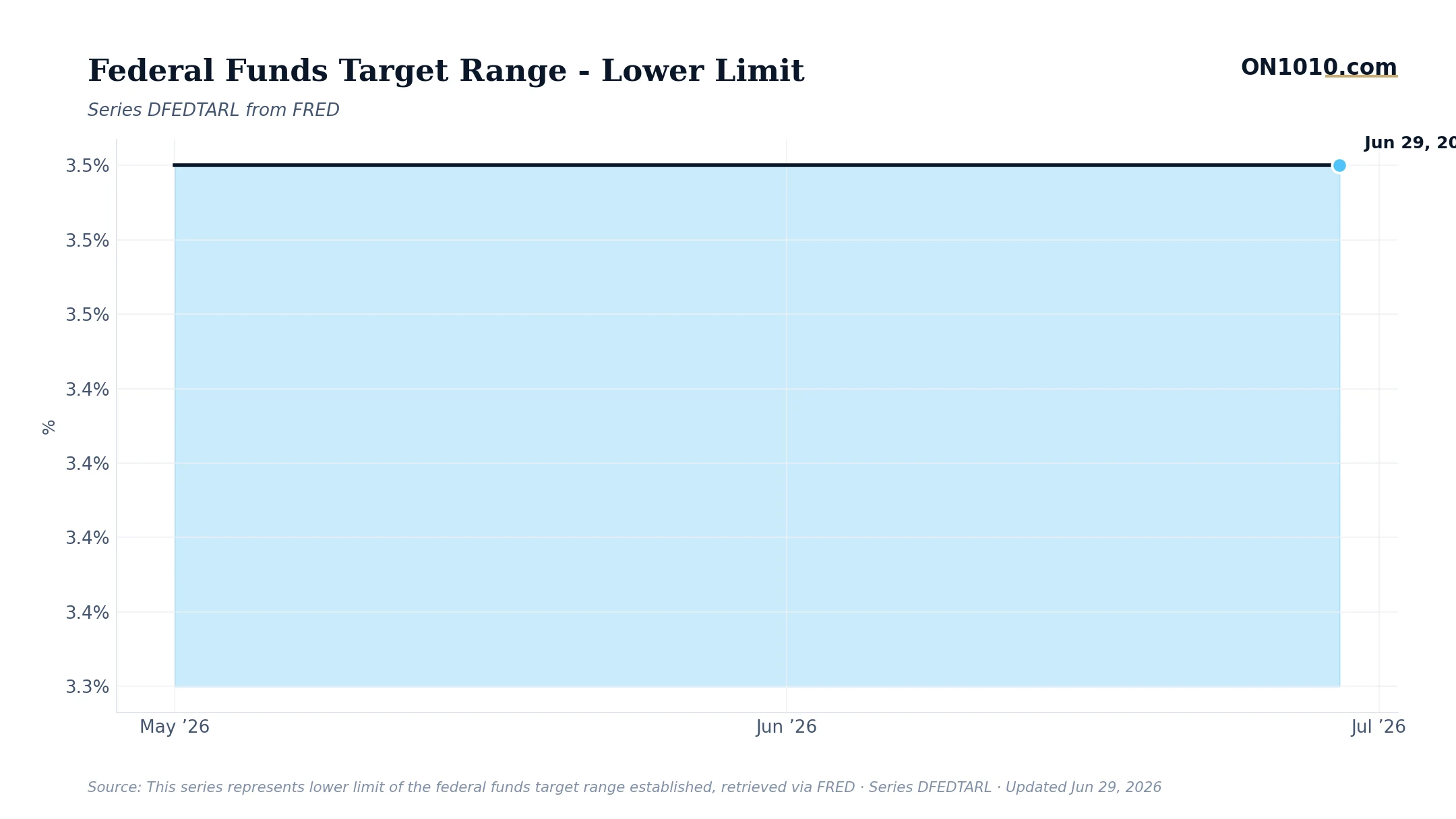
The federal funds rate lower bound has been parked at 3.5% since at least late June, and there is no sign of movement. On the surface, that looks like a confident, patient central bank. But the stock market is quietly telling a more complicated story.
The Bigger Picture
A rate held at 3.5% means the Fed still believes inflation risk has not fully cleared, or that the economy is strong enough to absorb borrowing costs at this level without cracking. Either way, the message is: we are not in a hurry. That is a meaningful shift from the aggressive cutting cycles some investors were pricing in earlier this year. For context, the Fed spent much of 2022 and 2023 hiking rates from near zero to over 5% to fight inflation. Getting back to 3.5% represented significant easing. Holding here means the Fed thinks it has found a sustainable resting point, at least for now.
What makes this interesting is the contradiction with what investors are actually doing. Defensive sectors like health care (+10.8% vs. the S&P 500 over the past month), utilities (+5.6%), and real estate (+4.9%) are all outperforming. That is a classic flight-to-safety rotation. The broad market is sitting just below its 50-day moving average, even while holding above its 200-day. Investors are not panicking, but they are clearly hedging.
Why It Matters
Historically, periods where the Fed holds rates steady after a cutting cycle have forced markets to reprice expectations. In past cycles, the question that tends to dominate is whether the Fed’s pause is a confident “soft landing” hold or an early sign that something is quietly stressing underneath. The sector rotation data here raises that question honestly.
Bottom Line: The Fed says 3.5% is fine. The market is rotating into safety plays anyway. Who turns out to be right about the risk ahead is the tension worth watching this summer.
Source: Federal Reserve Economic Data (FRED)
ON1010 Research is an independent publisher of economic education and is not a registered investment adviser, broker-dealer, or investment company. This content is for educational and informational purposes only and is not investment advice or a recommendation to buy, sell, or hold any security. Published under the publisher exemption recognized by Section 202(a)(11)(D) of the Investment Advisers Act of 1940 (Lowe v. SEC). Always consult a qualified financial professional before making any financial decision.
Free Research
The economy moves fast. We make sure you move faster.
Economic data, policy shifts, and market signals — delivered to your inbox.
Subscribe Free