
The 2-Year Yield Is Quietly Drifting Higher. The Fed Isn’t Done Yet.
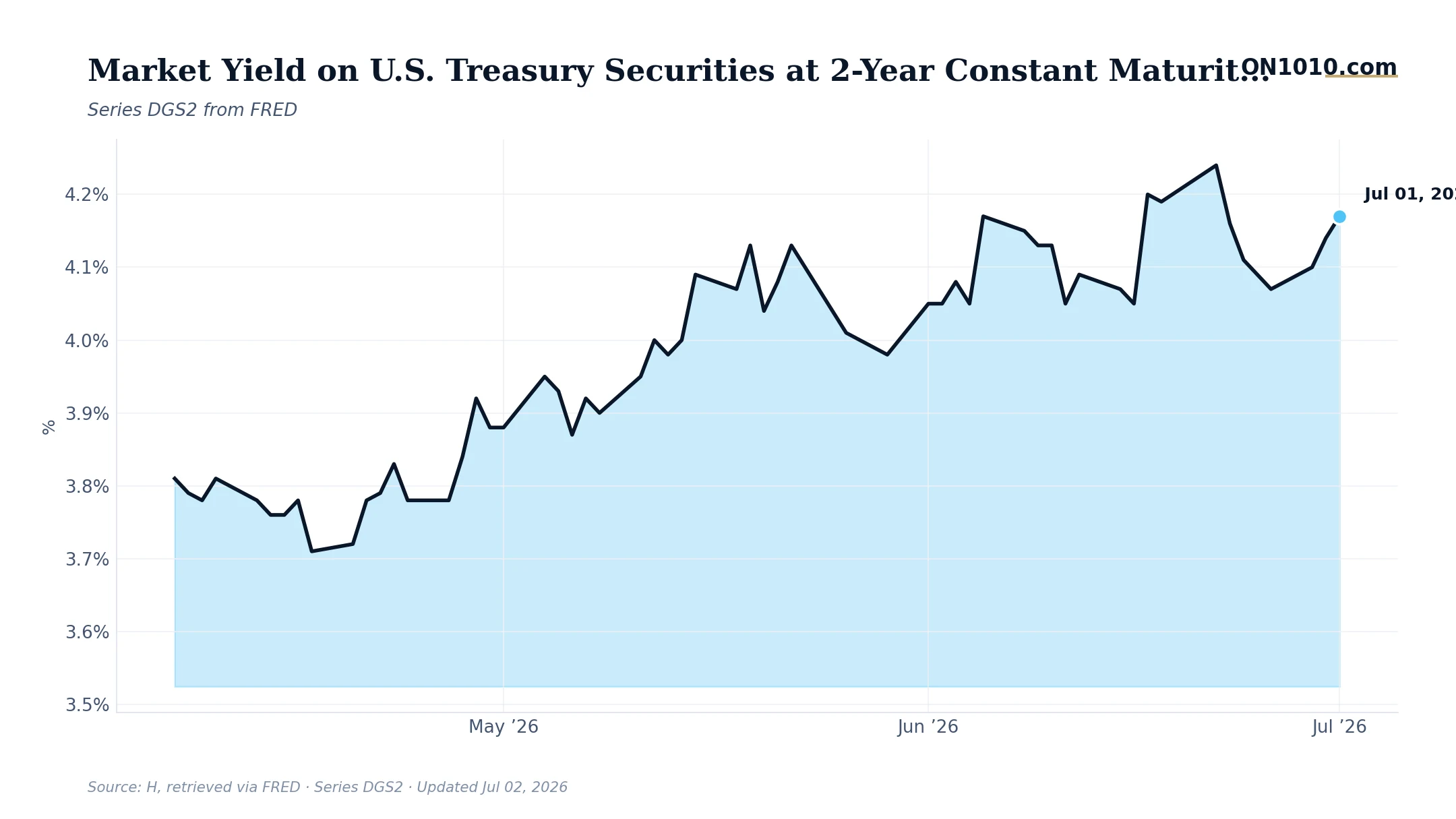
The 2-year Treasury yield ticked up to 4.17% on July 1, its fourth consecutive daily gain after bottoming near 4.07% on June 26. That’s a small move in absolute terms, but the direction is the story. Markets are nudging their rate expectations back up, not down.
The 2-year yield is essentially the market’s best guess at where the Fed will have rates over the next 24 months. When it rises, it means traders are pushing back their bets on rate cuts, or pricing in fewer of them altogether. After a stretch where markets were leaning hard into a “cuts are coming soon” narrative, this week’s drift suggests some of that optimism is being walked back. It fits with a broader pattern: the economy has proven more resilient than expected, and the Fed has little urgency to move.
That context matters when you look at what’s happening in equity markets simultaneously. Defensive sectors like health care, utilities, and consumer staples are outperforming the broader market by a wide margin over the past month, even as the SPY remains above both its 50-day and 200-day moving averages. Higher short-term yields and a rotation toward defensive names often travel together. When the cost of money stays elevated, growth-sensitive assets tend to face headwinds while steady cash flow businesses hold up better.
Historically, a 2-year yield holding above 4% has signaled that the Fed is keeping its foot on the brake. In past cycles, that kind of environment has prompted businesses and capital allocators to think carefully about the carrying cost of debt, the timeline for expansion projects, and how long “higher for longer” actually lasts.
Bottom Line: The 2-year yield is a real-time report card on what the market believes the Fed will do. Right now, that report card says: not yet. The question worth sitting with is whether the economy’s resilience keeps pushing that timeline out further.
Source: Federal Reserve Economic Data (FRED)
ON1010 Research is an independent publisher of economic education and is not a registered investment adviser, broker-dealer, or investment company. This content is for educational and informational purposes only and is not investment advice or a recommendation to buy, sell, or hold any security. Published under the publisher exemption recognized by Section 202(a)(11)(D) of the Investment Advisers Act of 1940 (Lowe v. SEC). Always consult a qualified financial professional before making any financial decision.
Free Research
The economy moves fast. We make sure you move faster.
Economic data, policy shifts, and market signals — delivered to your inbox.
Subscribe Free