
Core Inflation Holds Steady at 2.2% — But the Trend Underneath Is What Matters
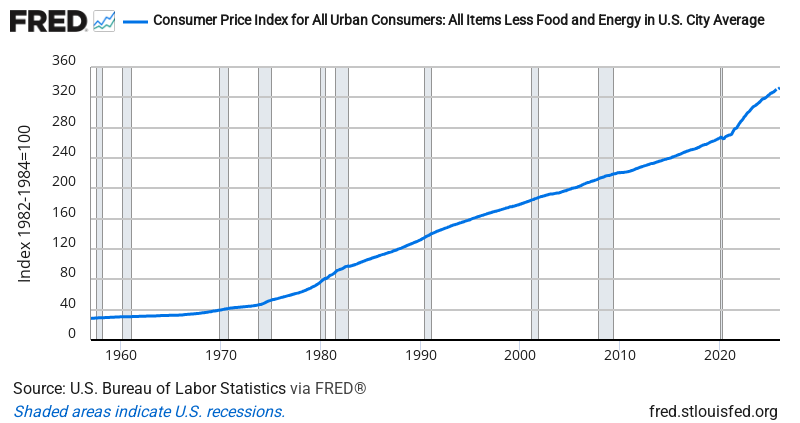
Core CPI ticked up 0.3% in January, keeping the annual rate locked at 2.18% for the second month running. While that’s comfortably near the Fed’s 2% target, the monthly pace tells a more interesting story.
That 0.3% monthly gain translates to a 3.6% annualized rate — meaningfully above the Fed’s comfort zone. More telling: core inflation has now posted four consecutive months of 0.3% increases, suggesting the disinflationary momentum that defined 2023 and early 2024 may be stalling. This isn’t the smooth glide path to 2% that policymakers were hoping for.
The persistence matters because it reflects what’s happening beneath the surface. Corporate profit margins remain elevated across most sectors, giving companies pricing power they haven’t had in years. Meanwhile, productivity gains that helped absorb wage increases in 2024 appear to be moderating. When businesses can pass through costs without losing customers, they will — and that’s exactly what we’re seeing in services, which make up the bulk of core CPI.
What This Means for Your Portfolio: Many professional investors view this type of “sticky” inflation environment as a reason to favor real assets over nominal bonds. Historically, when core inflation runs consistently above 2.5% on an annualized basis, investors have gravitated toward dividend-growth stocks, REITs, and commodities that can adjust pricing with inflation. Fixed-income investors often shift toward inflation-protected securities or shorter durations to reduce interest rate risk.
Bottom Line: The Fed got the headline number it wanted, but the underlying momentum suggests inflation’s final mile to 2% won’t be as smooth as the first 80% of the journey. The question now: does this persistence force a policy rethink?
Source: Federal Reserve Economic Data (FRED)
ON1010.com provides economic education for investors. Nothing here is investment advice. Always consult a qualified financial advisor before making investment decisions.
Free Research
The economy moves fast. We make sure you move faster.
Economic data, policy shifts, and market signals — delivered to your inbox.
Subscribe Free