
Unemployment Drops to 4.3%, But the Labor Market’s Real Story Is More Complex
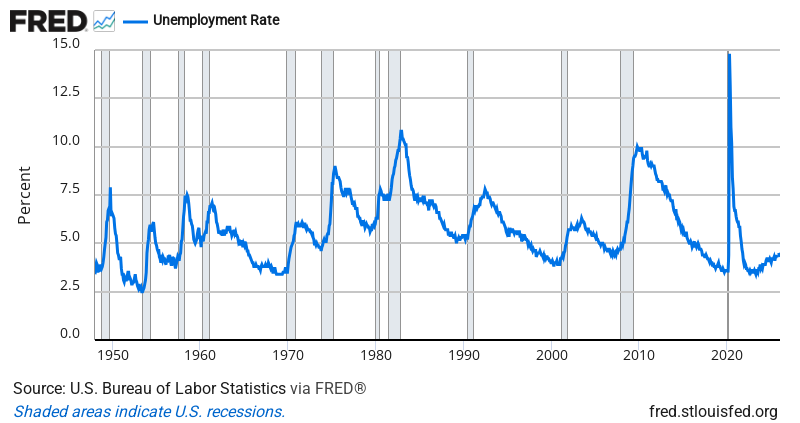
The unemployment rate fell to 4.3% in January from 4.4% in December — good news on the surface, but this number masks some interesting tensions brewing beneath.
Here’s what’s noteworthy: we’re now sitting right where we were back in July and August (4.3%), after that brief spike to 4.5% in November. That’s not the smooth trajectory you’d expect in a truly healthy labor market. Instead, it looks like we’re bouncing around a new equilibrium — higher than the sub-4% rates we saw for much of 2023, but not quite sliding into recession territory either.
This fits the pattern of an economy that’s cooling but not crashing. Corporate profit margins have been under pressure for months, leading to more selective hiring rather than mass layoffs. Companies are being pickier, keeping roles open longer, but they’re not panic-cutting either. The 4.3-4.5% range feels like the new normal — a labor market that’s loose enough to take pressure off wage inflation, but tight enough to keep consumer spending afloat.
Many professional investors view this type of “goldilocks” labor market as supportive for both stocks and bonds. It’s weak enough that the Fed doesn’t need to worry about runaway wage growth, but strong enough that earnings don’t collapse. Historically, this environment has favored quality companies with pricing power — businesses that can maintain margins even as labor costs stabilize rather than fall.
Bottom Line: A 4.3% unemployment rate isn’t exciting, but it might be exactly what markets need right now. The question is whether this stability holds, or if we’re just taking a breather before the next leg of weakening.
Source: Federal Reserve Economic Data (FRED)
ON1010.com provides economic education for investors. Nothing here is investment advice. Always consult a qualified financial advisor before making investment decisions.
Free Research
The economy moves fast. We make sure you move faster.
Economic data, policy shifts, and market signals — delivered to your inbox.
Subscribe Free