
Job Market Shows Signs of Life as Layoffs Drop to Six-Week Low
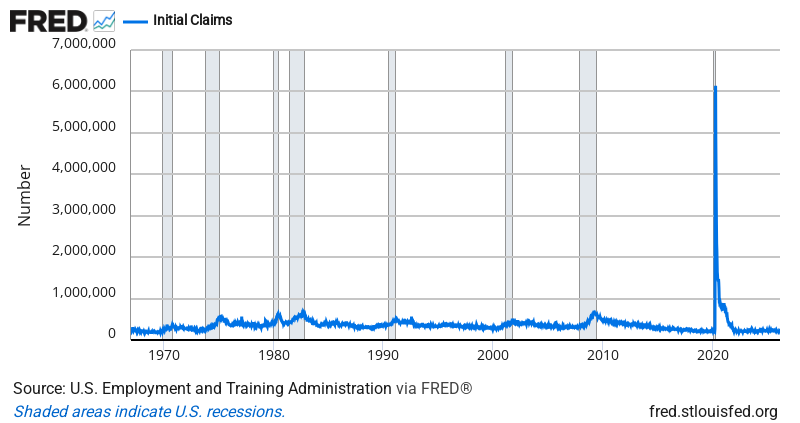
Initial jobless claims fell to 206,000 last week, down 23,000 from the previous week’s 229,000 reading — the biggest weekly drop in two months. After hovering around 230,000 for most of January, this sudden decline suggests employers may be tightening their grip on workers again.
This pullback is particularly interesting timing-wise. We’re in the heart of January layoff season, when companies typically clean house after year-end reviews. Yet claims are moving in the opposite direction of seasonal expectations. The 206,000 level puts us back near the 199,000 reading from early January — before the post-holiday adjustment period kicked in. This suggests the underlying job market may be more resilient than the recent uptick implied.
The bigger question is whether this reflects genuine labor market strength or just normal volatility around a higher baseline. Claims have been running consistently above 200,000 since late 2023, compared to the sub-200,000 readings that were common in 2021-2022. Companies are being more selective about hiring, but they’re also being more careful about firing — a sign that good workers are still hard to replace even in a cooler market.
Many professional investors watch this data for early signals about corporate profit margins. When companies stop laying people off, it often means they see revenue stability ahead. That can be bullish for stocks, particularly if it coincides with cooling inflation. Bond investors, meanwhile, use claims data to gauge whether the Fed might need to stay more aggressive — persistent job market strength could keep rate cuts off the table longer than expected.
Bottom Line: One week doesn’t make a trend, but employers pulling back on layoffs during traditional firing season suggests the job market’s foundation remains solid. The real test comes in March when seasonal hiring patterns normalize.
Source: Federal Reserve Economic Data (FRED)
ON1010.com provides economic education for investors. Nothing here is investment advice. Always consult a qualified financial advisor before making investment decisions.
Free Research
The economy moves fast. We make sure you move faster.
Economic data, policy shifts, and market signals — delivered to your inbox.
Subscribe Free