
Treasury Yields Hover Near Six-Week Lows as Markets Parse Fed Signals
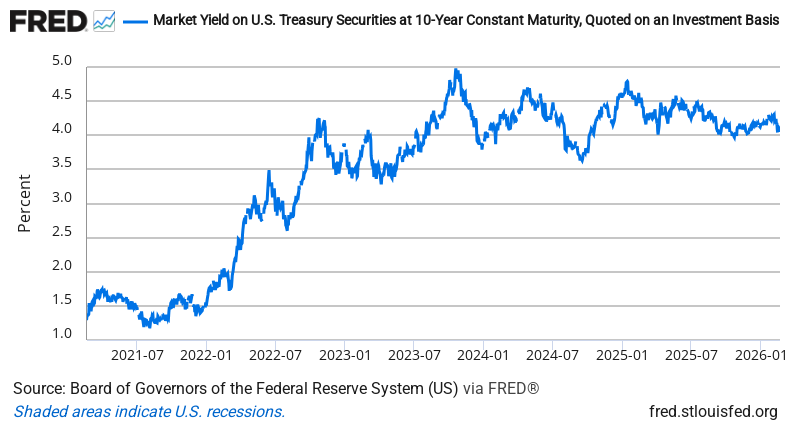
The 10-year Treasury yield dipped to 4.08% Wednesday, down slightly from 4.09% the previous day and sitting near its lowest level since early January. What’s interesting isn’t the tiny daily move — it’s that yields have been grinding lower for two weeks despite persistent inflation concerns and a resilient economy.
This downward drift tells us bond markets are betting the Federal Reserve is closer to the end of its tightening cycle than many realize. When yields fall while economic data remains solid, it usually means investors think current rates are already restrictive enough to slow growth without needing much more tightening. The 4.08% level puts real yields (after inflation) at historically restrictive levels — the kind that eventually bite into corporate investment and consumer spending, even if the effects take months to show up.
Here’s the bigger puzzle: if the economy is as strong as recent jobs and retail sales data suggest, why are bond investors comfortable with lower yields? Either they see cracks forming that aren’t visible yet, or they’re betting the Fed will prioritize financial stability over inflation fighting if anything breaks. Both scenarios favor bonds over time.
Many professional investors use falling long-term yields as a signal to reassess growth-sensitive positions. Historically, when the 10-year drops below 4% in a tightening cycle, it often precedes broader market shifts toward quality over speculation. Value investors tend to get more selective, while bond allocations become more attractive relative to dividend stocks.
Bottom Line: Bond markets are pricing in an economic slowdown that hasn’t shown up in the data yet. Either they’re wrong, or they’re early — and in macro investing, being early often looks a lot like being right.
Source: Federal Reserve Economic Data (FRED)
ON1010.com provides economic education for investors. Nothing here is investment advice. Always consult a qualified financial advisor before making investment decisions.
Free Research
The economy moves fast. We make sure you move faster.
Economic data, policy shifts, and market signals — delivered to your inbox.
Subscribe Free