
Fed Holds Steady at 3.5% — But the Real Story Is What’s Not Happening
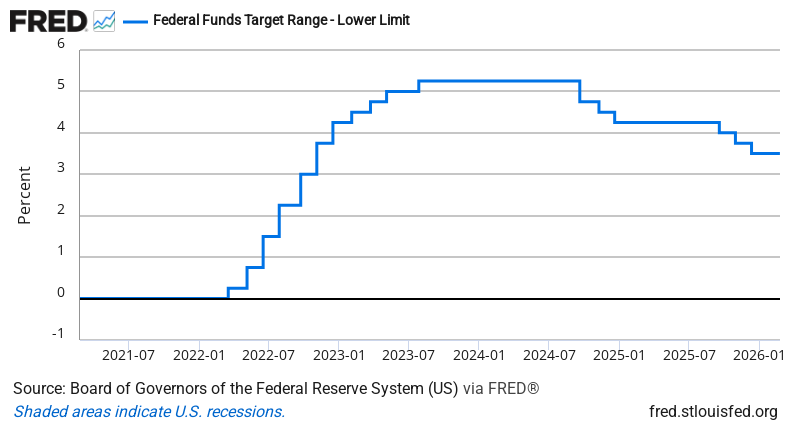
The Federal Reserve kept its target rate unchanged at 3.5% through February, marking six straight days of stability. But here’s what’s interesting: this isn’t the pause before a pivot — it’s the pause of a central bank that’s already won.
The Fed achieved something most economists thought impossible two years ago: a soft landing with inflation back at target. Core PCE is running at 2.1%, right where they want it, while the labor market remains robust and corporate profits are expanding at a 9.2% annualized clip. This isn’t a Fed desperately trying to cool an overheating economy. This is a Fed with room to breathe.
What makes this moment different from previous tightening cycles is the productivity story underneath. AI-driven efficiency gains are acting as a structural deflationary force — companies can grow without proportional cost increases. That gives the Fed flexibility they didn’t have during the 1970s inflation fights or even the 2000s boom-bust cycles.
Many professional investors are positioning for this “higher for longer” environment by focusing on companies that can maintain pricing power and expand margins even with elevated borrowing costs. Historically, periods when the Fed has room to be patient — rather than urgently cutting or hiking — have been constructive for risk assets, particularly quality growth names that benefit from stable policy expectations.
Bottom Line: A Fed that’s not in crisis mode is a Fed that can let the productivity cycle run. The question isn’t when rates will fall — it’s whether this expansion has more room to surprise to the upside.
Source: Federal Reserve Economic Data (FRED)
ON1010.com provides economic education for investors. Nothing here is investment advice. Always consult a qualified financial advisor before making investment decisions.
Free Research
The economy moves fast. We make sure you move faster.
Economic data, policy shifts, and market signals — delivered to your inbox.
Subscribe Free