
Fed Funds Rate Sits Dead Center as Markets Wait for Next Move
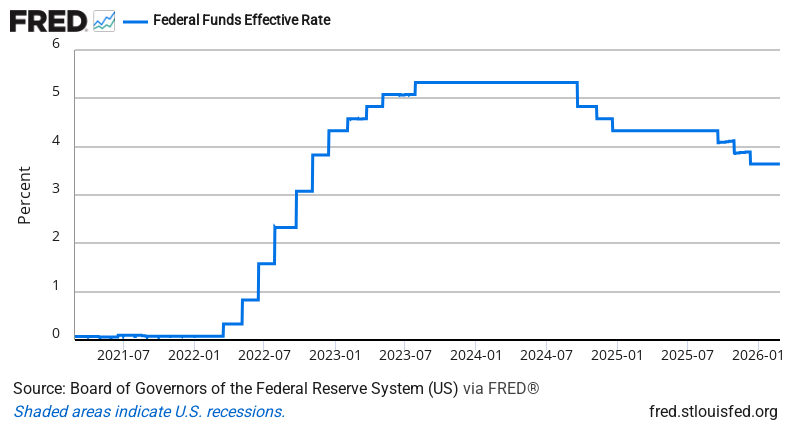
The federal funds rate held steady at 3.64% through the final week of February, sitting squarely in the middle of what most analysts consider neutral territory. That’s neither restrictive enough to choke growth nor loose enough to fuel speculation — exactly where the Fed wants to be as they assess whether their soft landing is complete.
Here’s what’s interesting: this rate represents the Fed’s successful threading of the needle. At 3.64%, policy is roughly neutral — not adding fuel to the economy but not actively hitting the brakes either. With core inflation running at target and corporate profit margins still expanding (up 9.2% annualized in Q4), the Fed has achieved something rare: bringing inflation down without breaking the economy. The current rate gives them flexibility to move in either direction as conditions evolve.
The stability also reflects confidence in the underlying productivity cycle. When AI-driven efficiency gains are structurally deflationary — helping companies grow profits without driving up costs — central banks don’t need to be as aggressive with rate policy. Think of it as the economy’s built-in cooling system working properly.
Many professional investors view this environment as favorable for a barbell approach: defensive positioning to weather any policy surprises, while maintaining exposure to productivity-driven growth themes. Historically, when the Fed achieves neutral policy during a profit expansion, it creates space for both bonds (stable rates) and equities (growing earnings) to perform.
Bottom Line: A boring federal funds rate is exactly what a healthy economy looks like — no drama, just steady policy supporting sustainable growth while keeping inflation in check.
Source: Federal Reserve Economic Data (FRED)
ON1010.com provides economic education for investors. Nothing here is investment advice. Always consult a qualified financial advisor before making investment decisions.
Free Research
The economy moves fast. We make sure you move faster.
Economic data, policy shifts, and market signals — delivered to your inbox.
Subscribe Free