
Treasury Yields Pull Back as Bond Market Finds Its Footing
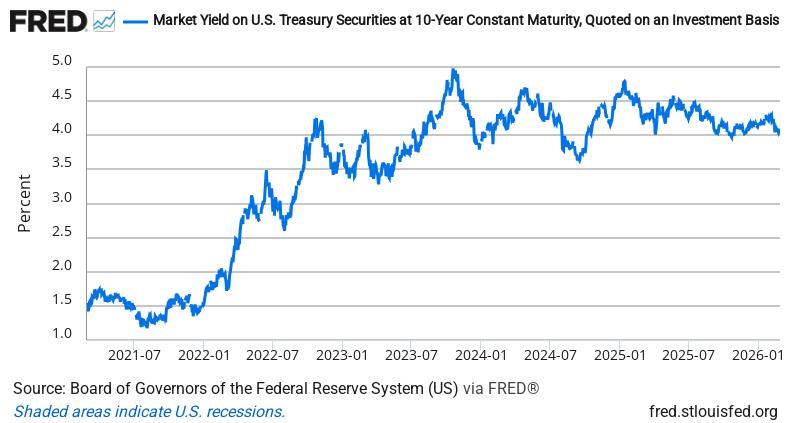
The 10-year Treasury yield dropped 3 basis points to 4.02% Wednesday, breaking a choppy week of trading that’s seen rates ping-pong between 4.03% and 4.08%. That might not sound like much, but in bond land, this kind of back-and-forth tells you something important: the market is genuinely unsure where rates should be right now.
Here’s the bigger picture — we’re sitting right in the sweet spot where economic fundamentals and Fed policy intersect. Corporate profits are still expanding (up 9.2% annualized in Q4), productivity gains from AI investment are keeping inflation pressures in check, and the Fed has achieved its soft landing with core inflation right at target. That’s the kind of setup that historically keeps the 10-year in a relatively stable range, which is exactly what we’re seeing.
But notice how money has been rotating into defensive sectors lately — utilities and consumer staples are crushing tech stocks this month. When professional investors start favoring dividend-paying utilities over growth names, they’re usually positioning for either slower growth ahead or just taking some risk off the table after a good run. In this environment, many institutional managers tend to shorten duration in their bond portfolios and look for income in places that can handle whatever comes next.
The 4% handle on the 10-year feels like a reasonable place to park while the market figures out whether the productivity boom has more room to run or if we’re due for a breather.
Bottom Line: Bond markets are in wait-and-see mode, but the underlying fundamentals — expanding margins, stable inflation, no recession in sight — suggest this chop is more about finding fair value than pricing in trouble ahead.
Source: Federal Reserve Economic Data (FRED)
ON1010.com provides economic education for investors. Nothing here is investment advice. Always consult a qualified financial advisor before making investment decisions.
Free Research
The economy moves fast. We make sure you move faster.
Economic data, policy shifts, and market signals — delivered to your inbox.
Subscribe Free