
Fed Holds Steady at 3.5% — But the Real Story Is What Comes Next
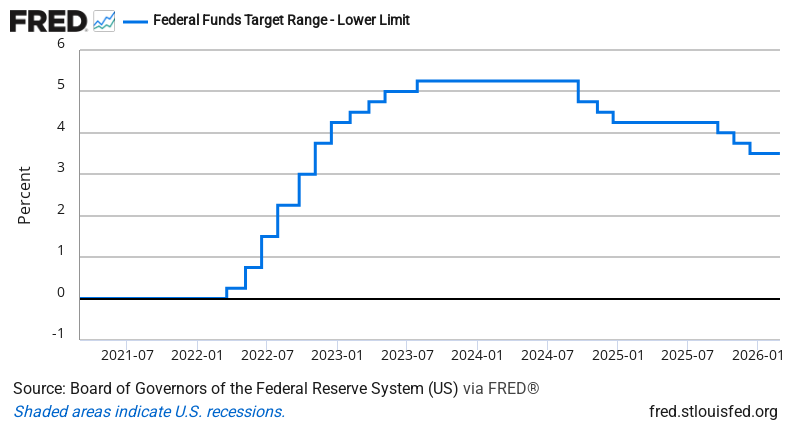
The Federal Reserve kept its target rate unchanged at 3.5% through February, marking six consecutive days at this level — but the bigger question isn’t what they’re doing now, it’s whether this “restrictive” rate is actually restrictive anymore.
Here’s the puzzle: with corporate profits up 9.2% annualized in Q4 and productivity gains accelerating from AI investment, the neutral rate — the level that neither stimulates nor restricts growth — may have shifted higher. If neutral is now closer to 4%, then 3.5% isn’t the brake pedal the Fed thinks it is. It’s more like coasting downhill.
This matters because markets are pricing in eventual rate cuts while the economy shows zero signs of needing them. The productivity cycle driven by AI adoption looks structurally similar to the mid-1990s tech boom, where rising productivity allowed the economy to run hotter without triggering inflation. Core inflation is sitting right at the Fed’s 2% target, giving policymakers room to let this expansion run — but also removing the urgency for cuts that bond markets are expecting.
Many professional investors are repositioning around this “higher for longer” reality, rotating toward financials and away from rate-sensitive growth stocks. The defensive sector outperformance we’re seeing — utilities and staples beating tech by wide margins — suggests institutional money is hedging against the possibility that rates stay elevated longer than consensus expects.
Bottom Line: The Fed’s 3.5% rate isn’t the economic headwind it used to be. In a world where productivity is rising and profits are expanding, “restrictive” policy may need to be recalibrated — and that’s a very different backdrop for asset allocation than the rate-cutting cycle markets have been pricing in.
Source: Federal Reserve Economic Data (FRED)
ON1010.com provides economic education for investors. Nothing here is investment advice. Always consult a qualified financial advisor before making investment decisions.
Free Research
The economy moves fast. We make sure you move faster.
Economic data, policy shifts, and market signals — delivered to your inbox.
Subscribe Free