
The 4% Line Is Breaking Down
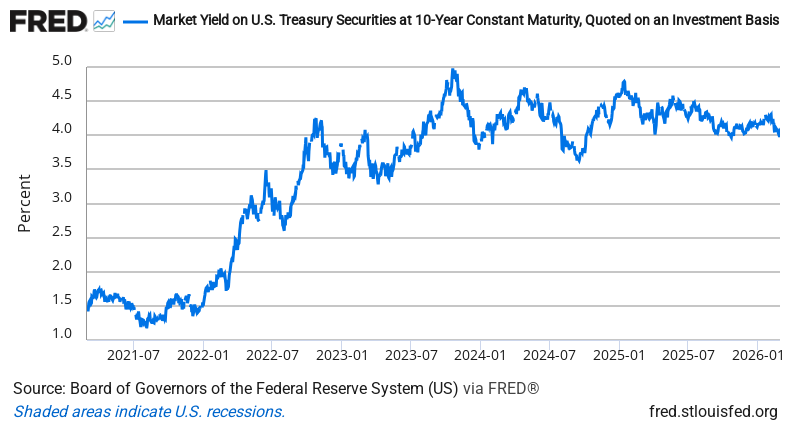
The 10-Year Treasury yield dropped to 3.97% yesterday, slipping below the psychologically important 4% threshold for the first time since early February. That’s a 5 basis point decline in one day and part of a steady 11 basis point slide over the past week.
This isn’t just a random wiggle in bond prices. The 4% level has acted as a floor for Treasury yields since late 2023, with multiple failed attempts to break meaningfully lower. When key technical levels like this give way, it often signals a shift in the underlying fundamentals driving interest rates — either inflation expectations are cooling, growth concerns are rising, or both.
The timing is particularly interesting. We’re seeing this yield decline despite a resilient job market and persistent inflation readings above the Fed’s 2% target. That suggests bond investors are either pricing in a more aggressive Fed pivot than the central bank is signaling, or they’re growing concerned about economic momentum ahead of key data releases. Historically, when the 10-year yield breaks below well-established support levels, it tends to keep falling as momentum builds.
Many professional investors view breaks below key yield levels as potential rotation signals. Lower long-term rates typically benefit growth stocks and interest-sensitive sectors like REITs and utilities, while potentially pressuring financial stocks that depend on wide interest rate spreads. Bond investors might consider this a sign that the peak rate cycle is behind us, though that’s far from certain given the Fed’s cautious messaging.
Bottom Line: The 4% floor just cracked, and that could mark the beginning of a more meaningful decline in long-term rates — if the economic data cooperates.
Source: Federal Reserve Economic Data (FRED)
ON1010.com provides economic education for investors. Nothing here is investment advice. Always consult a qualified financial advisor before making investment decisions.
Free Research
The economy moves fast. We make sure you move faster.
Economic data, policy shifts, and market signals — delivered to your inbox.
Subscribe Free