
The Fed’s Rate Lock: What Market Stability Actually Tells Us
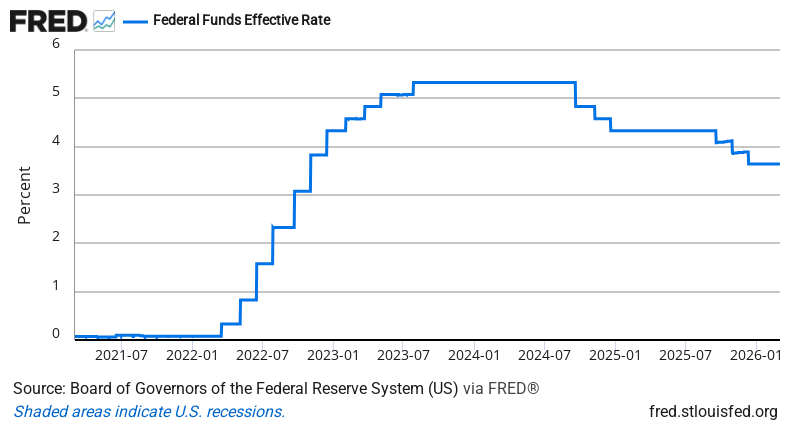
The effective federal funds rate has sat glued at 3.64% for six straight days, perfectly tracking the Fed’s target with machine-like precision. But this stability isn’t boring — it’s revealing something important about where we are in the monetary policy cycle.
When the overnight lending rate moves in lockstep with the Fed’s target, it signals that banks have plenty of liquidity and credit markets are functioning smoothly. No scrambling for cash, no weird spikes or dips that would suggest stress in the banking system. The plumbing works.
This matters more than most investors realize. During periods of financial stress, the effective rate often trades above the Fed’s target as banks hoard cash and charge premiums for overnight loans. Think March 2020 or the 2008 crisis. When it trades below target, it usually means the Fed is pumping too much liquidity into the system.
But 3.64% on the dot? That’s the Goldilocks zone — exactly where monetary policy is supposed to operate when the economy is running normally.
The bigger picture here connects to corporate profit margins, which expanded 9.2% in the fourth quarter. When credit markets are stable and borrowing costs are predictable, companies can plan capital investments with confidence. That predictability is fuel for the productivity cycle we’re seeing play out in AI and technology investment.
Historically, investors have used the effective funds rate as an early warning system. When it starts diverging from the Fed’s target — either direction — it often signals brewing changes in financial conditions before they show up in broader economic data.
Bottom Line: A boring overnight rate is actually good news — it means the financial system’s foundation is solid while the economy builds on top of it.
Source: Federal Reserve Economic Data (FRED)
ON1010.com provides economic education for investors. Nothing here is investment advice. Always consult a qualified financial advisor before making investment decisions.
Free Research
The economy moves fast. We make sure you move faster.
Economic data, policy shifts, and market signals — delivered to your inbox.
Subscribe Free