
Bond Market Sends Mixed Signals as 2-Year Yield Jumps to 3.51%
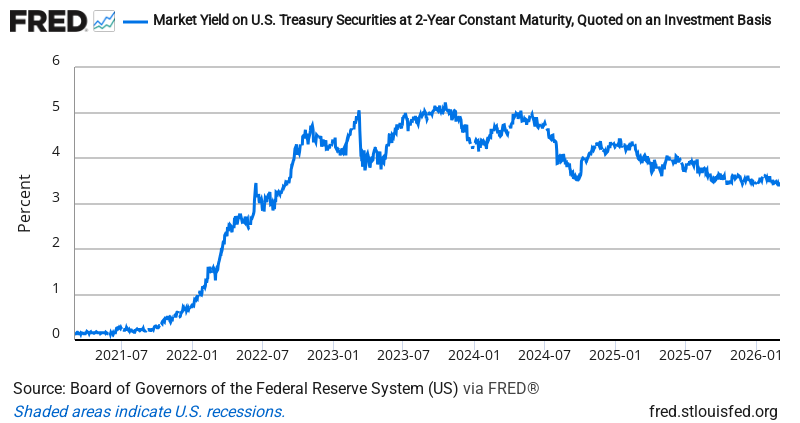
The 2-year Treasury yield spiked 4 basis points to 3.51% yesterday — its highest close in a week — after bouncing around between 3.38% and 3.47% over the past few trading sessions. This isn’t dramatic by historical standards, but it’s notable because the 2-year has been unusually choppy lately, suggesting bond traders are genuinely unsure about what the Fed will do next.
Here’s what makes this interesting: the 2-year yield is essentially the market’s best guess for where Fed rates will be over the next 24 months. When it’s bouncing around this much — up 13 basis points from last Tuesday’s low — it means investors are getting conflicting signals about the economy. Either recent data has been genuinely mixed, or the market is struggling to price in some new information. The fact that we’re sitting right around 3.5% suggests traders think the Fed is roughly done with its current cycle, but they’re not confident enough to make big bets either direction.
This kind of yield volatility often happens when the economy is at an inflection point — when old trends are breaking down but new ones haven’t clearly emerged yet. Professional bond traders are essentially saying “we think rates stay around here, but we’re not sure enough to bet heavily on it.”
Many professional investors use periods like this to reassess duration risk in their portfolios. When rate direction becomes unclear, some consider shortening the average maturity of their bond holdings or looking at floating-rate securities that adjust with changing conditions. Historically, this type of 2-year yield choppiness has also led equity investors to focus more on companies with strong cash flows and less debt.
Bottom Line: When the bond market’s crystal ball gets cloudy, it usually means something important is shifting beneath the surface — we just don’t know what yet.
Source: Federal Reserve Economic Data (FRED)
ON1010.com provides economic education for investors. Nothing here is investment advice. Always consult a qualified financial advisor before making investment decisions.
Free Research
The economy moves fast. We make sure you move faster.
Economic data, policy shifts, and market signals — delivered to your inbox.
Subscribe Free