
American Consumers Hit the Brakes in December
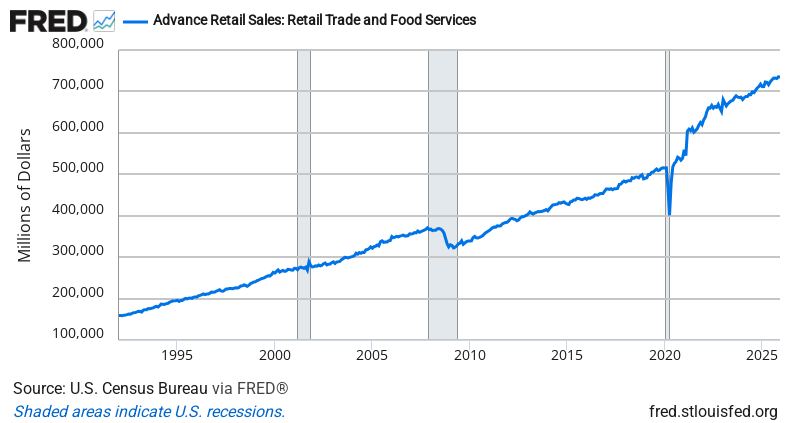
Retail sales dropped 0.02% in December to $735 billion, breaking a modest upward trend that had been building through the fall. It’s a tiny decline, but the timing tells a bigger story about how consumers are entering 2025.
This marks the first monthly decline since September, coming right as holiday shopping should have been peaking. The year-over-year growth of 3.26% looks healthy until you remember that’s barely ahead of inflation — meaning consumers aren’t actually buying much more stuff, just paying more for it. What’s particularly striking is the choppy pattern over the past six months: up, down, sideways, repeat. That’s not the behavior of confident consumers on a spending spree. It’s the pattern of households being more selective about where they put their dollars.
The consumer represents 70% of the economy, so when spending growth stalls at inflation levels, it signals businesses may need to work harder for revenue growth. Companies have been banking on steady consumer demand to justify current profit margins. If households are tightening their belts — even slightly — that puts pressure on corporate pricing power heading into earnings season.
In this type of environment, many professional investors start paying closer attention to companies with genuine pricing power versus those riding the inflation wave. Historically, periods of consumer spending deceleration have led investors to favor businesses with strong competitive moats over those dependent on broad-based demand growth.
Bottom Line: When the consumer — the economy’s engine — starts running in fits and starts, everything else gets more complicated. The real question is whether this December pause was holiday fatigue or the start of something more cautious.
Source: Federal Reserve Economic Data (FRED)
ON1010.com provides economic education for investors. Nothing here is investment advice. Always consult a qualified financial advisor before making investment decisions.
Free Research
The economy moves fast. We make sure you move faster.
Economic data, policy shifts, and market signals — delivered to your inbox.
Subscribe Free