
Bond Market Sees Fed Pivot Coming
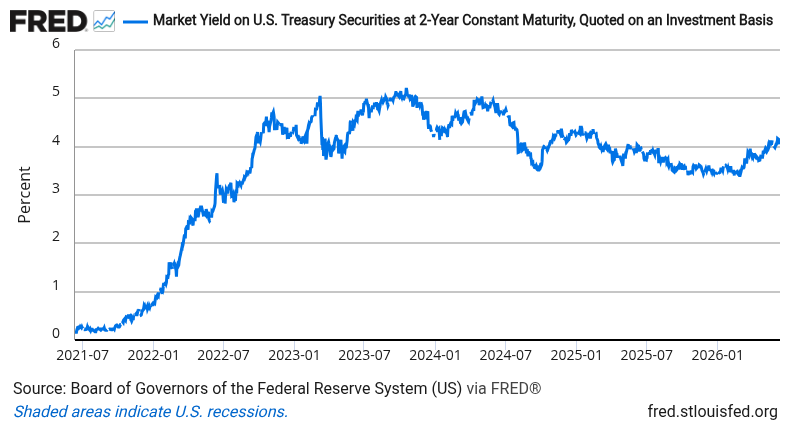
The 2-year Treasury yield dropped 8 basis points to 4.05% yesterday — a sharp one-day move that signals bond traders are increasingly betting the Fed’s rate-hiking cycle is not just over, but about to reverse.
Here’s what makes this interesting: the 2-year yield is essentially a real-time polling of where bond traders think the Fed funds rate will be over the next 24 months. When it drops this quickly, it means money is flooding into short-term Treasuries as investors position for rate cuts. The yield has now fallen 12 basis points over the past week, suggesting this isn’t just a one-day fluke.
This fits a pattern we’ve seen before. In previous cycles, the 2-year yield often peaks and starts declining 3-6 months before the Fed actually starts cutting rates. Bond traders aren’t waiting for the Fed to tell them what’s coming — they’re pricing it in based on economic data that suggests inflation is cooling and growth is softening. When the 2-year moves this decisively, it’s usually because institutional investors see something in the employment or inflation data that makes them confident about the Fed’s next move.
In this type of environment, many professional investors start considering a barbell approach — keeping some exposure to short-term bonds to capture current yields while positioning for the capital gains that longer-term bonds typically deliver when rates fall. Historically, when the 2-year yield drops this quickly, it often precedes broader market rotation away from rate-sensitive sectors and toward growth stocks that benefit from cheaper borrowing costs.
Bottom Line: The bond market is voting with real money that the Fed’s tightening phase is over. When the 2-year yield moves this fast, it’s worth asking: what do bond traders see that the Fed hasn’t said yet?
Source: Federal Reserve Economic Data (FRED)
ON1010.com provides economic education for investors. Nothing here is investment advice. Always consult a qualified financial advisor before making investment decisions.
Free Research
The economy moves fast. We make sure you move faster.
Economic data, policy shifts, and market signals — delivered to your inbox.
Subscribe Free