
Bond Market Sends Mixed Signals as 2-Year Treasury Hovers Near Recent Highs
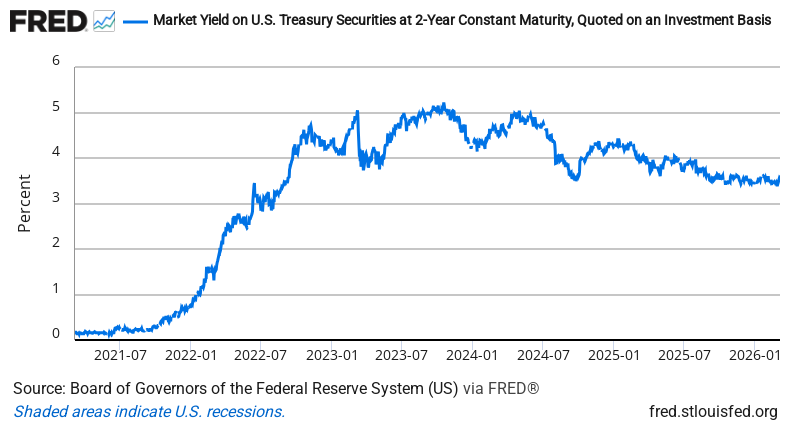
The 2-year Treasury yield dropped to 3.56% Friday from 3.57% Thursday, a tiny move that masks a much bigger story. Over the past week, this key rate has climbed from 3.38% to current levels, a 0.18 percentage point jump that suggests bond traders are rethinking their Fed expectations.
Here’s what makes this interesting: the 2-year yield is the market’s best guess at where Fed rates are headed over the next 24 months. When it rises this quickly, it means investors are either pricing in more rate hikes than they expected a week ago, or they’re demanding higher compensation for inflation risk. Neither interpretation is particularly bullish for risk assets.
The timing matters. This move higher comes as defensive sectors have been crushing offensive ones, with utilities up 10.5% versus the S&P 500 over the past month while financials lag by 4.3%. That’s classic risk-off behavior. Bond yields rising while investors flee to defensive stocks creates a puzzle: are we seeing genuine economic strength that justifies higher rates, or growing concern about Fed policy mistakes?
The most likely explanation is that markets are recalibrating around a stickier inflation environment. Corporate profit margins remain historically fat and still expanding, which typically gives companies pricing power. Add in ongoing AI-driven productivity gains and tariff-related cost pressures, and you get an economy that can handle higher rates but might force the Fed to keep them there longer than investors hoped just a few weeks ago.
Historically, when 2-year yields climb this fast while defensive sectors outperform, professional managers start asking whether the soft landing narrative is getting too comfortable. The bond market rarely lies about Fed policy for long.
Bottom Line: Bond traders are betting the Fed stays higher for longer, even as equity investors rotate defensively. That combination usually means something has to give.
Source: Federal Reserve Economic Data (FRED)
ON1010.com provides economic education for investors. Nothing here is investment advice. Always consult a qualified financial advisor before making investment decisions.
Free Research
The economy moves fast. We make sure you move faster.
Economic data, policy shifts, and market signals — delivered to your inbox.
Subscribe Free