
Bond Market Shrugs as Inflation Expectations Hold Near Fed’s Target
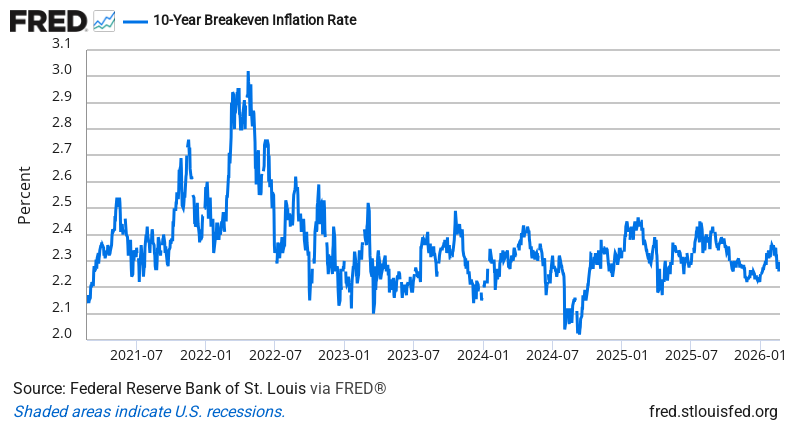
The 10-year breakeven inflation rate ticked down to 2.28% Thursday, barely budging from 2.29% the day before. What’s remarkable isn’t the microscopic daily move — it’s that long-term inflation expectations remain anchored right where the Fed wants them, even as tariffs reshape trade flows and government spending creates fiscal noise.
This stability tells a bigger story about market confidence in the productivity boom driving the current cycle. Despite $175 billion in potential tariff refunds working through the system and ongoing legal battles over trade policy, bond investors aren’t pricing in an inflation breakout. They’re betting that AI-driven service sector efficiency gains will offset any price pressures from trade disruptions — essentially wagering that technology deflates faster than tariffs inflate.
The contrast with previous trade wars is striking. When Nixon imposed broad tariffs in 1971, inflation expectations spiraled. Today’s markets seem convinced that capital investment in productivity tools, not protectionist policies, will define the price environment. Corporate margins keep expanding despite tariff costs, suggesting businesses are finding ways to absorb trade friction without passing it through to consumers.
Many professional investors view this anchored inflation outlook as supportive for duration positioning — when real rates stay attractive and inflation fears stay contained, longer-term bonds can outperform. Historically, periods of stable breakeven rates around 2.3% have coincided with steady economic expansion rather than boom-bust cycles.
Bottom Line: Markets are pricing in a Goldilocks scenario where productivity gains keep inflation in check despite fiscal and trade policy turbulence. The real test comes if those efficiency gains don’t materialize as quickly as investors expect.
Source: Federal Reserve Economic Data (FRED)
ON1010.com provides economic education for investors. Nothing here is investment advice. Always consult a qualified financial advisor before making investment decisions.
Free Research
The economy moves fast. We make sure you move faster.
Economic data, policy shifts, and market signals — delivered to your inbox.
Subscribe Free