
Bond Markets Signal Confidence as Oil Prices Ease
The Opening Bell
Bond markets are sending a quietly bullish signal this morning, with Treasury yields stabilizing even as the energy crisis continues to dominate headlines. The 10-year/2-year spread has held steady at 0.41% for five straight sessions, suggesting investors are growing more confident that the Fed’s pause will prevent the oil shock from spiraling into broader economic damage.
Market Snapshot
Fed Funds Target Range: 3.5%-3.75%
10-Year Treasury: 4.46%
2-Year Treasury: 4.05%
10Y-2Y Spread: 0.41% (normal)
Breakeven Inflation (10Y): 2.38%
The yield curve’s calm persistence tells a story. When bond traders are genuinely worried about runaway inflation or recession risk, they don’t sit still. This five-day stretch of stability suggests markets are threading the needle between energy-driven inflation fears and confidence in the underlying economy’s resilience.
What Moved Yesterday
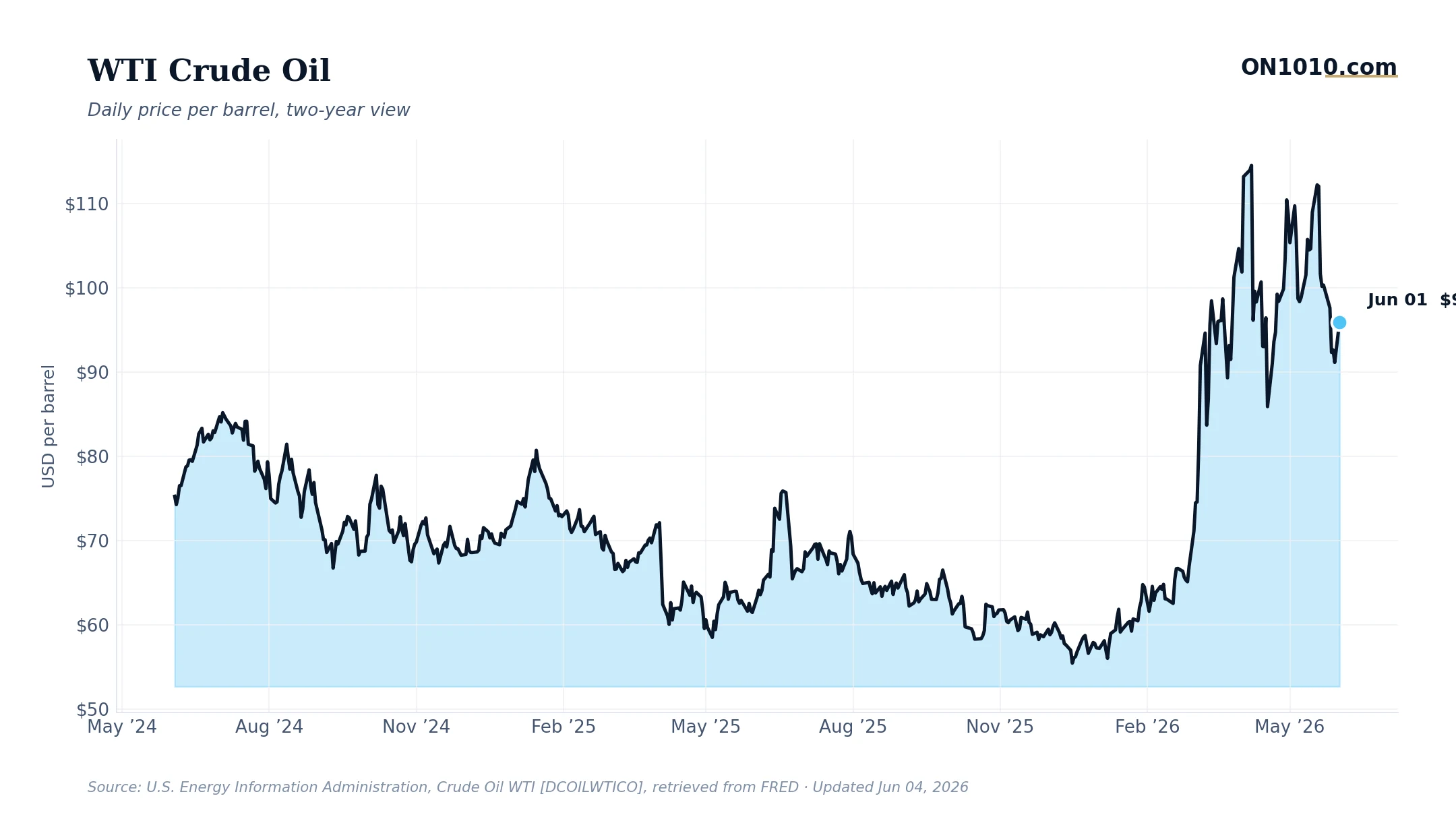
The most telling signal came from bond markets themselves. While oil prices remain elevated near $95 per barrel, Treasury yields barely budged. The 10-year yield actually dipped slightly to 4.46%, while the 2-year held steady at 4.05%. That’s not the behavior you’d expect if investors were genuinely panicking about either runaway inflation or economic collapse.
ADP’s private payroll data reinforced this narrative of underlying strength. The 122,000 gain in May beat expectations and, more importantly, showed hiring breadth returning beyond just healthcare. When businesses are confident enough to expand their workforce across multiple sectors while oil sits 40% above pre-crisis levels, that’s a sign of economic durability. Corporate margins may be under pressure, but they’re clearly not under enough pressure to trigger widespread layoffs.
The Fed’s personnel moves under new Chair Warsh also suggest policy continuity rather than crisis management. First hires are about building a team, not firefighting. That reinforces the market’s read that the current 3.5%-3.75% fed funds range represents a sustainable pause, not a temporary holding pattern before emergency cuts.
Today’s Playbook
Watch how bond markets react to any energy price movements. Oil futures have been volatile, but the key test is whether Treasury yields start tracking oil tick-for-tick again or maintain their recent independence. If the 10-year yield can hold near 4.46% even on oil strength, that’s evidence the bond market believes the energy shock is contained.
The bigger question is whether this calm persists through Friday’s jobs report. Employment data will be the first major test of whether the economy is absorbing the energy shock without broad-based weakness. A solid payroll number combined with stable wage growth would validate the bond market’s current positioning. Conversely, any sign that energy costs are starting to bite into hiring plans could quickly unwind this newfound stability.
The Bigger Picture
What we’re seeing looks increasingly like the 1990 Gulf War playbook rather than the 1979 oil crisis. Oil spikes, markets initially panic, but the underlying economy proves resilient enough to absorb the shock without falling into recession. The key difference this time is that the US is a net energy exporter, creating natural economic buffers that didn’t exist in previous oil crises.
The bond market’s behavior suggests investors are starting to price in this resilience. A normal yield curve, stable breakeven inflation expectations, and Treasury yields that aren’t spiking despite $95 oil all point to a market that’s moved past crisis mode into adjustment mode. The economy isn’t immune to energy shocks, but it’s proving more durable than the initial panic suggested.
Bottom Line: Bond markets are quietly telling us the energy crisis may be contained. If Treasury yields can hold steady while oil remains elevated, that’s evidence the economy has found its footing despite the external shock.
ON1010 Research is an independent publisher of economic education and is not a registered investment adviser, broker-dealer, or investment company. This content is for educational and informational purposes only and is not investment advice or a recommendation to buy, sell, or hold any security. Published under the publisher exemption recognized by Section 202(a)(11)(D) of the Investment Advisers Act of 1940 (Lowe v. SEC). Always consult a qualified financial professional before making any financial decision.
Free Research
The economy moves fast. We make sure you move faster.
Economic data, policy shifts, and market signals — delivered to your inbox.
Subscribe Free