
Bond Markets Signal Fed Pivot as 2-Year Yields Drop Below 4%
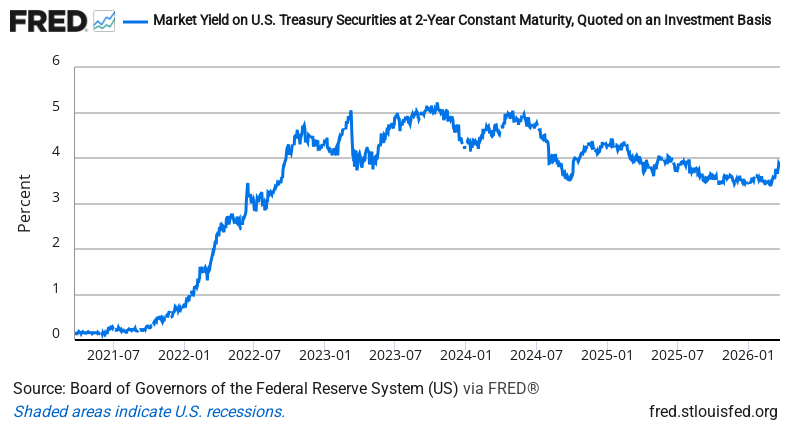
The 2-year Treasury yield fell to 3.83% on Friday, down from 3.88% earlier in the week — a small move that carries big implications. When the bond market’s most sensitive instrument to Fed policy drops five basis points in three days, it’s telling you something about what traders expect from Jerome Powell’s next move.
Here’s what makes this interesting: the 2-year has now given up most of its March gains, settling back near levels we saw in mid-February. Bond traders are essentially betting that whatever economic strength we’ve seen recently isn’t enough to keep the Fed on pause much longer. When yields fall this consistently, it usually means the market is pricing in either slower growth ahead or actual rate cuts within the next 12-18 months.
This fits with a broader pattern we’re seeing across fixed income — longer-term rates have been more volatile, but the front end of the curve keeps grinding lower. That’s classic late-cycle behavior, when investors start positioning for the Fed to shift from restrictive to neutral policy. The question isn’t whether the Fed will cut rates, but when and how much.
For your portfolio, this type of environment historically benefits investors who position early in quality bonds before yields fall further. Many professional traders use periods like this to extend duration — locking in today’s yields before they potentially drop to 3% or lower. It’s also worth watching how this impacts growth stocks, which tend to outperform when interest rate pressure starts to ease.
Bottom Line: When the bond market’s most Fed-sensitive instrument keeps falling despite decent economic data, it’s pricing in a policy shift that hasn’t happened yet. The yield curve is telling you to think six months ahead, not six weeks.
Source: Federal Reserve Economic Data (FRED)
ON1010.com provides economic education for investors. Nothing here is investment advice. Always consult a qualified financial advisor before making investment decisions.
Free Research
The economy moves fast. We make sure you move faster.
Economic data, policy shifts, and market signals — delivered to your inbox.
Subscribe Free