
Bond Markets Signal Long-Term Inflation Anchored Despite Recent Volatility
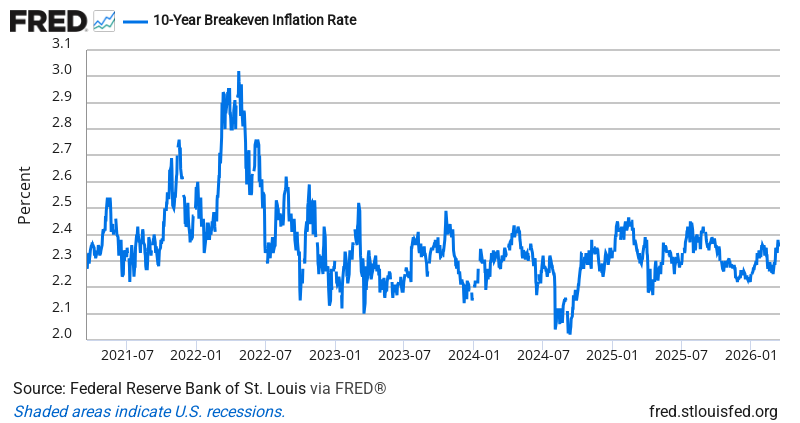
The 10-year breakeven inflation rate ticked up to 2.37% on Friday, barely budging from 2.36% the day before. But here’s what’s interesting: despite all the market turbulence lately, long-term inflation expectations remain stubbornly anchored right around the Fed’s 2% target.
This matters more than the tiny daily moves suggest. Breakeven rates reflect what bond investors actually expect inflation to average over the next decade, not next month or next quarter. When these expectations stay stable, it tells you the market believes the Fed has credibility and that any current price pressures are temporary noise.
Look at the recent pattern: breakevens have traded in a tight 2.33% to 2.38% range over the past week. That’s remarkable stability for a measure that can swing wildly when investors lose confidence in monetary policy. Compare this to 2022, when 10-year breakevens spiked above 3% as markets questioned whether the Fed could contain inflation without breaking something important.
The stability here suggests professional investors aren’t buying the narrative that current economic strength automatically means runaway inflation. They’re looking through temporary factors and betting that productivity gains from AI investment will keep long-term price pressures manageable. When corporate profit margins are expanding (as they are now) while inflation expectations stay anchored, that’s typically a sign that businesses are getting more efficient, not just passing costs through to consumers.
Historically, investors have viewed stable breakeven rates as a green light for risk assets. When long-term inflation expectations are well-behaved, the Fed has room to focus on growth rather than emergency inflation-fighting. In environments like this, professional managers tend to focus on earnings growth rather than defensive positioning.
Bottom Line: Bond markets are essentially giving the economy a vote of confidence, betting that current growth won’t spark the kind of inflation spiral that would force aggressive Fed tightening. Sometimes the most important signal is what’s not happening.
Source: Federal Reserve Economic Data (FRED)
ON1010.com provides economic education for investors. Nothing here is investment advice. Always consult a qualified financial advisor before making investment decisions.
Free Research
The economy moves fast. We make sure you move faster.
Economic data, policy shifts, and market signals — delivered to your inbox.
Subscribe Free