
Bond Markets Think Inflation Is Still Yesterday’s Problem
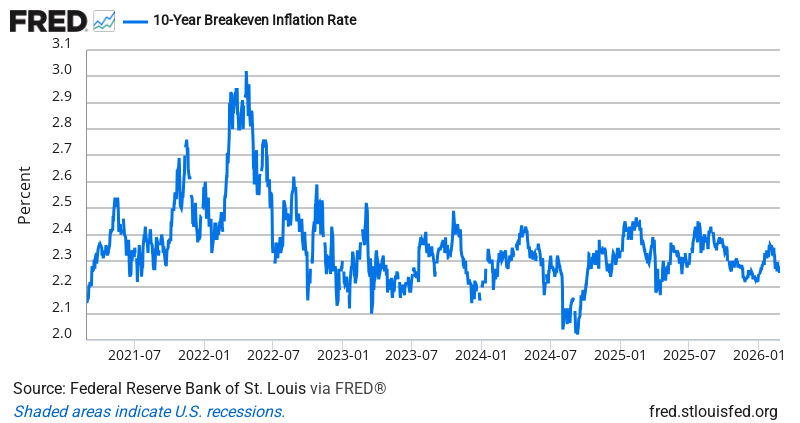
The 10-year breakeven inflation rate ticked up to 2.28% yesterday from 2.26% — a tiny move that tells a bigger story. While markets obsess over every Fed meeting and inflation print, long-term inflation expectations remain remarkably stable, hovering right around the Fed’s 2% target for months.
This stability is actually the story. Despite tariff uncertainty, government spending cuts, and AI reshaping entire industries, bond markets aren’t pricing in any dramatic inflation surprises over the next decade. That suggests investors see the current economic expansion as fundamentally different from the 1970s or even the post-COVID surge — they’re betting on productivity gains keeping prices in check even as growth accelerates.
The historical parallel is telling. During the mid-1990s tech boom, breakevens stayed calm even as the economy ran hot because productivity was rising fast enough to absorb the growth without triggering inflation. We may be seeing something similar now, with AI-driven efficiency gains giving the economy more runway than traditional models suggest.
For portfolios, this creates an interesting dynamic. Many professional investors view stable long-term inflation expectations as a green light for risk assets — it means the Fed has room to stay accommodative if growth stumbles, but also suggests the expansion can continue without triggering aggressive tightening. Historically, this “Goldilocks” environment has favored growth over value and equities over bonds.
Bottom Line: When inflation expectations stay this well-anchored during an expansion, it usually means the economy has found a sweet spot that can last longer than anyone expects.
Source: Federal Reserve Economic Data (FRED)
ON1010.com provides economic education for investors. Nothing here is investment advice. Always consult a qualified financial advisor before making investment decisions.
Free Research
The economy moves fast. We make sure you move faster.
Economic data, policy shifts, and market signals — delivered to your inbox.
Subscribe Free