
Claims Tick Higher, But the Real Story Is What Hasn’t Happened Yet
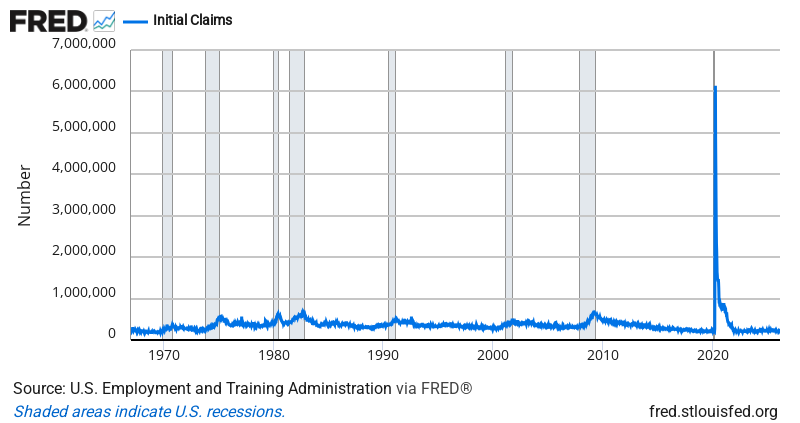
Initial jobless claims rose to 212,000 last week, up from 208,000 the week before — a modest 4,000 increase that keeps the labor market humming along in remarkably steady territory.
What’s notable isn’t the uptick itself, but the persistent stability. We’re now sitting comfortably in the 200,000-230,000 range that’s defined this cycle, with last week’s reading still well below the 232,000 peak we saw in late January. For context, anything under 300,000 historically signals a healthy job market, and we haven’t seen sustained readings above that threshold in over two years.
This steadiness matters because it suggests businesses aren’t panicking about their workforce costs, even as wage growth remains elevated. Companies that are confident about demand don’t lay people off — they find ways to absorb higher labor costs through productivity gains or pricing power. The claims data supports the narrative that we’re seeing a labor market normalization, not a collapse. Corporate profit margins have held up better than many expected, giving employers room to keep their teams intact while they adjust to higher wage structures.
Historically, this type of environment — where unemployment stays low but wage pressures persist — has led many professional investors to focus on companies with strong pricing power and operational leverage. Quality businesses that can maintain margins while absorbing higher labor costs tend to separate themselves from the pack. Bond investors, meanwhile, often watch claims data closely as a leading indicator of whether the Fed might need to adjust course on rates.
Bottom Line: A stable labor market is giving companies time to adapt to higher wage costs rather than forcing immediate layoffs — exactly what you’d want to see in a soft landing scenario.
Source: Federal Reserve Economic Data (FRED)
ON1010.com provides economic education for investors. Nothing here is investment advice. Always consult a qualified financial advisor before making investment decisions.
Free Research
The economy moves fast. We make sure you move faster.
Economic data, policy shifts, and market signals — delivered to your inbox.
Subscribe Free