
Consumer Financial Stress Hits Two-Year High Despite Stable Inflation Outlook
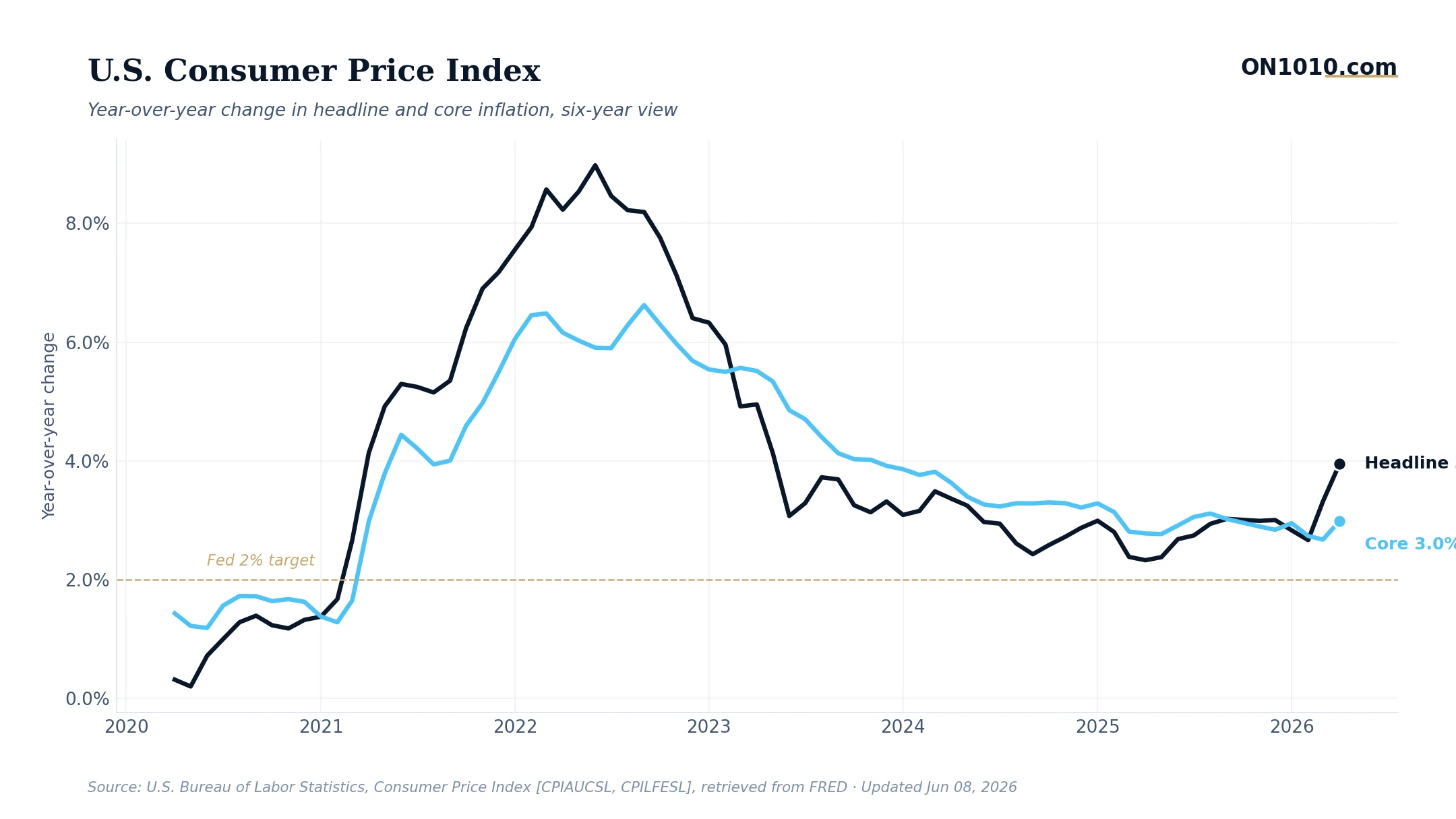
According to CNBC, household financial worries reached their highest level since July 2022 in the New York Fed’s latest consumer survey, even as inflation expectations held relatively steady. The disconnect between perception and data reveals something more nuanced than headline anxiety: consumers are sensing margin pressure before it shows up in official statistics.
This divergence makes sense when you follow the money flows. While core inflation expectations remain anchored, households are experiencing the real-time squeeze from higher energy costs and compressed purchasing power. With oil trading near $95 following the Strait of Hormuz closure, energy-intensive goods and services are getting more expensive faster than broad inflation measures capture. Corporate profit margins are starting to compress as companies absorb input cost increases rather than immediately pass them through to consumers.
The timing matters here. Consumer financial stress typically leads official economic data by several months. When households report deteriorating conditions while macro indicators look stable, it often signals that businesses are using their balance sheet flexibility to maintain market share rather than maintain margins. That works for a while, but not indefinitely.
Historically, investors have watched for this exact pattern: consumer sentiment deteriorating ahead of corporate earnings disappointments. The mechanism is straightforward, when households feel financially stressed, they start making different spending choices, which eventually shows up in company revenues and margins. The question worth considering is whether current margin compression is temporary energy shock absorption or the beginning of a broader demand slowdown.
Bottom Line: When consumers report financial stress despite stable macro data, follow the lead, they’re often sensing margin pressure and demand shifts before the numbers catch up.
Read more: CNBC Economy
ON1010 Research is an independent publisher of economic education and is not a registered investment adviser, broker-dealer, or investment company. This content is for educational and informational purposes only and is not investment advice or a recommendation to buy, sell, or hold any security. Published under the publisher exemption recognized by Section 202(a)(11)(D) of the Investment Advisers Act of 1940 (Lowe v. SEC). Always consult a qualified financial professional before making any financial decision.
Free Research
The economy moves fast. We make sure you move faster.
Economic data, policy shifts, and market signals — delivered to your inbox.
Subscribe Free