
Consumer Sentiment Stays Sluggish Despite Economic Recovery
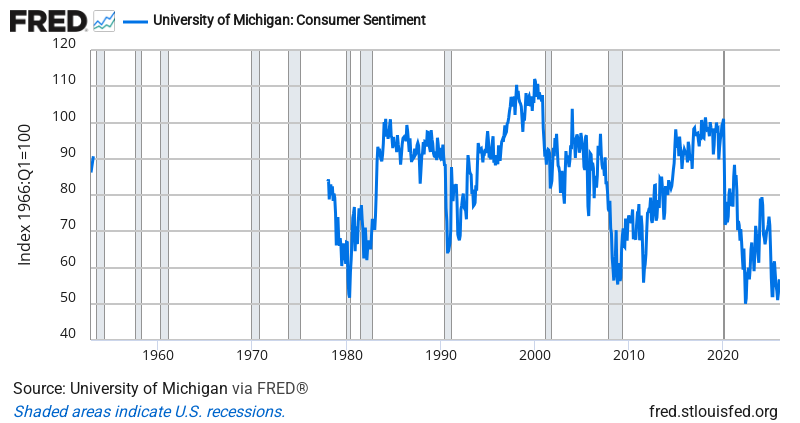
Consumer sentiment barely budged in February, inching up just 0.2 points to 56.6 — still 20% below the pre-recession highs and signaling Americans remain deeply cautious about the economic outlook. The University of Michigan’s closely-watched gauge has been stuck in this lackluster range for months, even as other indicators show the economy gaining momentum.
Here’s what’s puzzling: sentiment typically follows employment and inflation trends with a lag, but we’re seeing a disconnect. Jobs data has been solid, wage growth is running ahead of inflation, and corporate earnings remain strong. Yet consumers aren’t feeling it. This mirrors the post-2008 recovery when sentiment lagged the data by 12-18 months, suggesting psychological scarring takes time to heal.
The energy shock from the Strait of Hormuz closure is likely weighing on confidence, even though the US benefits as a net energy exporter. Higher gas prices hit consumer psychology immediately — they see it every time they fill up — while the broader economic benefits to US energy producers take longer to materialize. With oil trading near $95 and the Fed pausing rate cuts due to inflation fears, consumers are probably bracing for tougher times ahead.
Historically, this type of sentiment environment has led many professional investors to favor defensive sectors and quality dividend stocks over growth plays. When consumers are cautious, they prioritize necessities over discretionary spending, making consumer staples and utilities more attractive. Value stocks often outperform growth when sentiment is depressed but fundamentals remain decent.
Bottom Line: Sentiment is the economy’s mood ring — and right now, Americans are feeling anxious despite decent fundamentals. This psychological overhang could become self-fulfilling if it translates into reduced spending.
Source: Federal Reserve Economic Data (FRED)
ON1010.com provides economic education for investors. Nothing here is investment advice. Always consult a qualified financial advisor before making investment decisions.
Free Research
The economy moves fast. We make sure you move faster.
Economic data, policy shifts, and market signals — delivered to your inbox.
Subscribe Free