
Economic Wire: Treasury yields dip as oil falls to pre-war levels
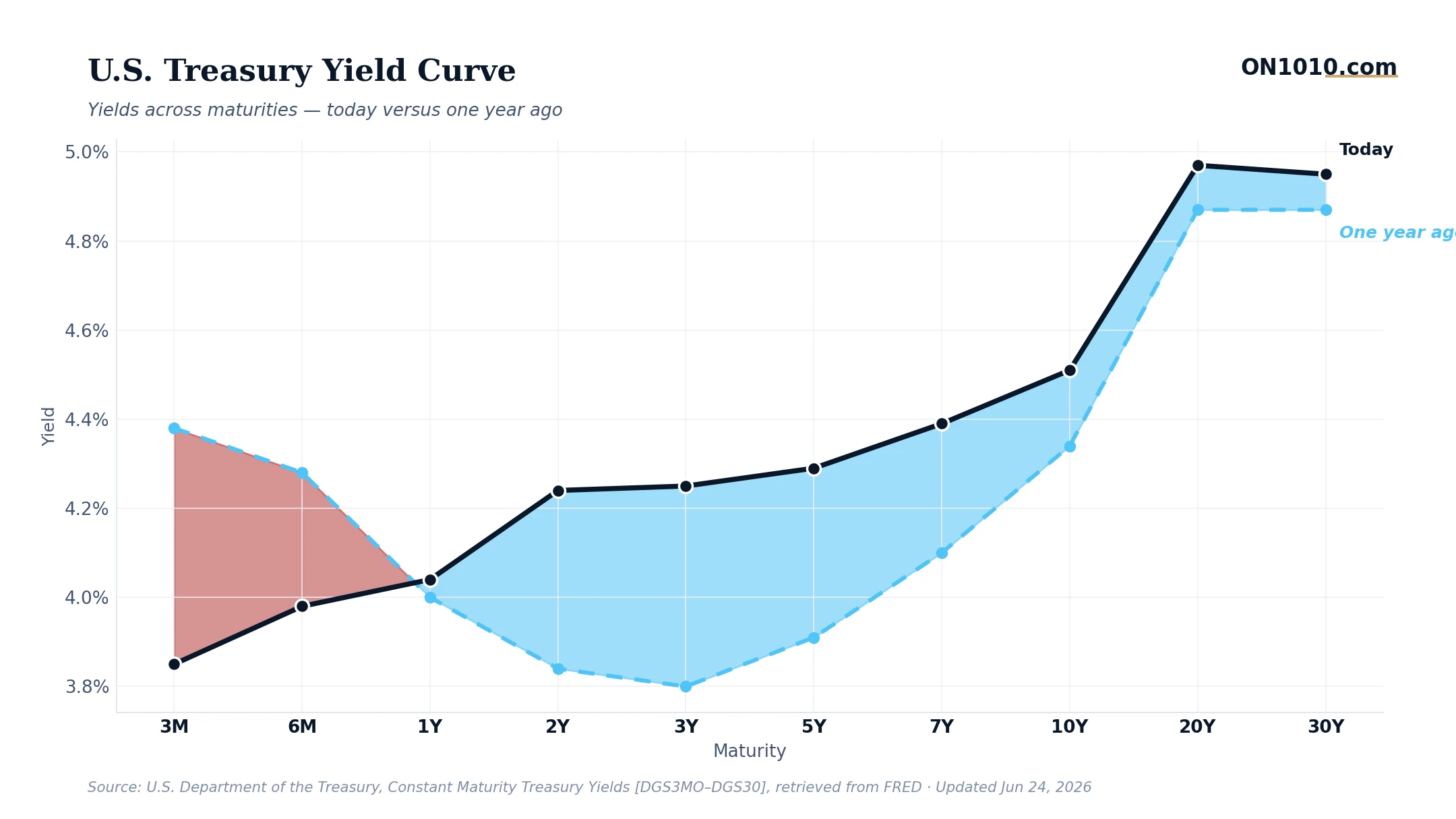
When Oil Falls Back to Earth, the Bond Market Listens
According to CNBC, the 10-year U.S. Treasury yield dipped Tuesday as oil prices fell back to pre-war levels. It sounds like a routine market update. It isn’t.
The mechanism here is worth pausing on. Oil is one of the most direct inputs into inflation. When energy prices fall, they pull down costs across the economy, from shipping and manufacturing to the simple cost of getting to work. Lower input costs mean less pressure on consumer prices, which means bond investors don’t need as much yield to protect themselves from inflation eating their returns. The 10-year yield, verified at 4.51% as of June 22, has room to drift lower if this energy reprieve holds.
The constructive case here is real. Falling oil is effectively a tax cut for every business that moves goods or uses energy in production. It expands profit margins quietly, before any analyst raises their earnings estimate. In past cycles, investors have watched energy-driven margin expansion as an early signal that corporate earnings could surprise to the upside, not because revenue accelerated, but because costs fell first. That’s a meaningful distinction.
The broader market backdrop reinforces this read. Financials, industrials, and technology are all outperforming the S&P 500, and SPY is trading above both its 50-day and 200-day moving averages, a setup historically associated with sustained upward momentum rather than fragile rallies. The VIX at 19.35 suggests markets are alert but not fearful.
The question worth sitting with: is this an energy price correction that sticks, or a temporary dip before supply concerns resurface? Historically, investors have treated durable oil declines very differently from short-lived ones, because only the former reliably reshapes inflation expectations and monetary policy outlooks.
Bottom Line: Oil falling back to pre-war levels is more than an energy story. It’s a potential inflation break that touches Treasury yields, corporate margins, and the Fed’s calculus all at once.
Read more: CNBC Top News
ON1010 Research is an independent publisher of economic education and is not a registered investment adviser, broker-dealer, or investment company. This content is for educational and informational purposes only and is not investment advice or a recommendation to buy, sell, or hold any security. Published under the publisher exemption recognized by Section 202(a)(11)(D) of the Investment Advisers Act of 1940 (Lowe v. SEC). Always consult a qualified financial professional before making any financial decision.
Free Research
The economy moves fast. We make sure you move faster.
Economic data, policy shifts, and market signals — delivered to your inbox.
Subscribe Free