
Fed Funds Rate Holds Dead Steady as Oil Shock Reshapes Policy
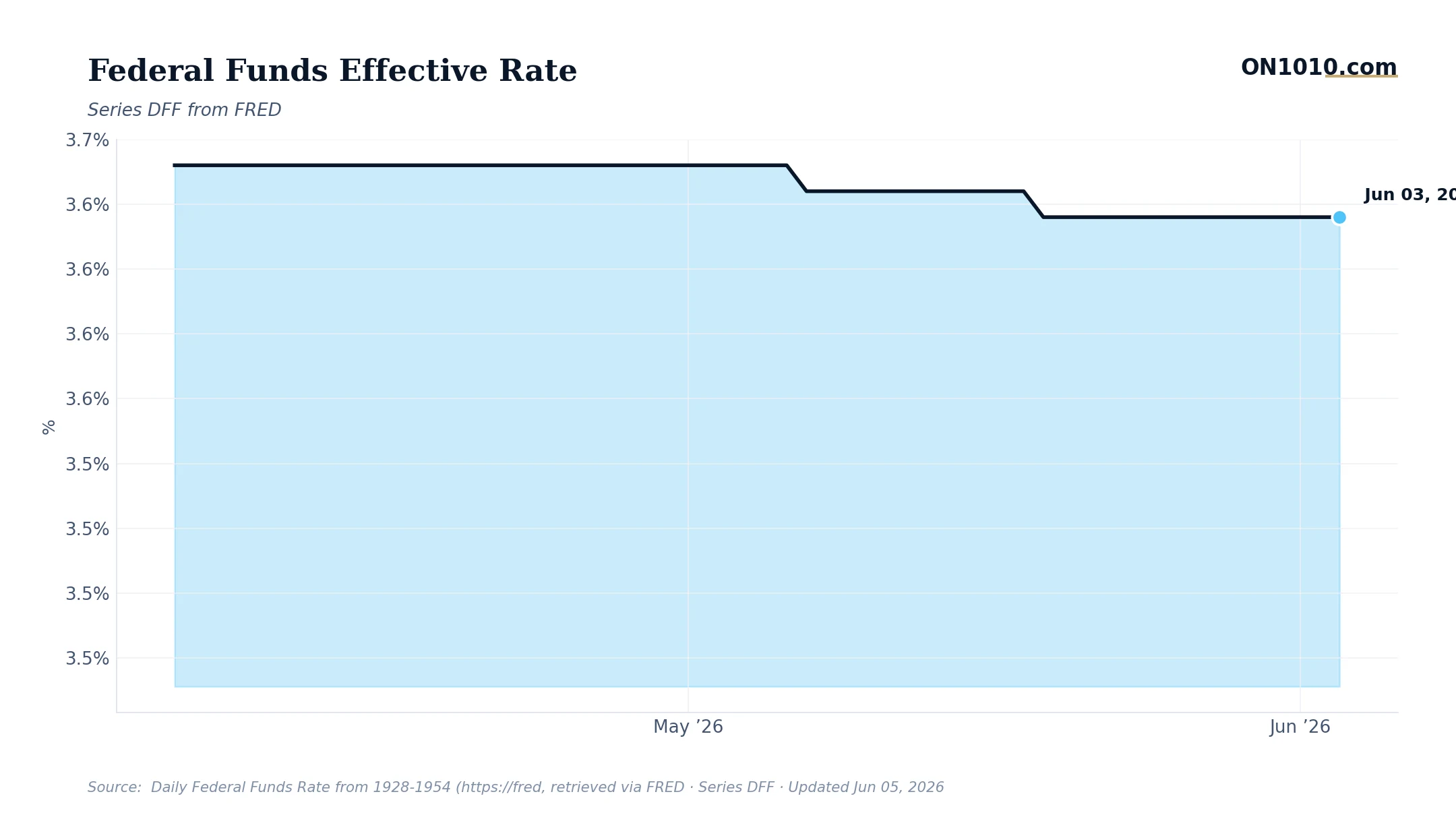
The effective federal funds rate sits frozen at 3.62%, unchanged for six straight trading days as the Fed navigates the most complex policy environment since the 1970s. With oil trading near $95 following the Strait of Hormuz closure, the central bank has effectively shelved rate cuts while markets adjust to a new inflationary reality.
This isn’t the gentle easing cycle anyone expected three months ago. The Fed’s target rate typically moves in 25 or 50 basis point increments during policy meetings, but the effective rate, what banks actually charge each other overnight, reveals the real story. When it holds this steady at 3.62%, it signals the Fed is keeping liquidity conditions exactly where they want them while they assess how much energy inflation will stick.
The stalled easing cycle reflects a fundamental shift in the Fed’s calculus. Before the Hormuz crisis, inflation was settling around 2.5% annually and rate cuts seemed inevitable. Now, with every sustained 10% oil premium adding roughly 0.6% to CPI, the Fed faces the specter of monthly inflation prints that could start with a “1”, the kind of reading that would make any central banker’s hands shake.
Historically, when the Fed pauses mid-cycle due to external shocks, businesses and investors have focused on two questions: how long will the pause last, and what breaks first, inflation expectations or economic growth? The 1970s taught us that energy-driven inflation can become entrenched if policymakers ease too quickly. The 2008 experience showed that credit conditions can tighten rapidly when the Fed stops cutting.
Bottom Line: The Fed’s steady hand at 3.62% isn’t dovish patience, it’s hawkish caution in the face of an energy shock that’s rewriting the inflation playbook. The question isn’t when cuts resume, but whether this new oil price floor forces the next move higher.
Source: Federal Reserve Economic Data (FRED)
ON1010 Research is an independent publisher of economic education and is not a registered investment adviser, broker-dealer, or investment company. This content is for educational and informational purposes only and is not investment advice or a recommendation to buy, sell, or hold any security. Published under the publisher exemption recognized by Section 202(a)(11)(D) of the Investment Advisers Act of 1940 (Lowe v. SEC). Always consult a qualified financial professional before making any financial decision.
Free Research
The economy moves fast. We make sure you move faster.
Economic data, policy shifts, and market signals — delivered to your inbox.
Subscribe Free