
Fed Funds Rate Inches Lower as Energy Crisis Shifts Policy Calculus
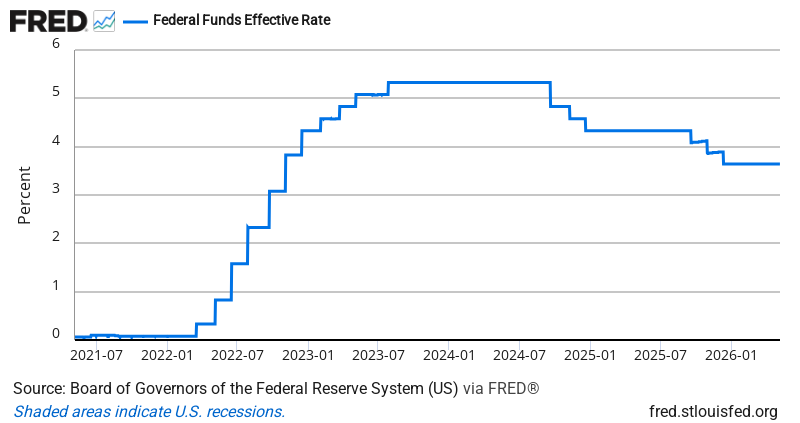
The effective federal funds rate ticked down to 3.63% yesterday from 3.64%, a tiny move that signals something bigger: the Fed’s tight grip on monetary policy is starting to show hairline cracks as the Strait of Hormuz crisis reshapes the economic landscape.
This 0.01 percentage point decline might seem trivial, but it’s the first meaningful movement in weeks. The rate has been locked in a tight 3.64% band since early May as the Fed maintains its hawkish stance against energy-driven inflation. With oil trading near $95 — up from $66 before the Strait closure — the central bank has shelved any thoughts of rate cuts. But even small deviations from the target range suggest interbank funding markets are starting to price in different scenarios.
The bigger picture: this tiny softening comes as the energy shock creates a complex policy puzzle. Higher oil prices typically force the Fed to stay restrictive longer, but they also create recessionary headwinds that could eventually demand easier policy. The effective rate trading slightly below the upper end of the Fed’s range suggests some banks are getting less aggressive about overnight funding — possibly preparing for a longer period of economic uncertainty.
Many professional investors watch the effective funds rate for early signals of policy shifts before official Fed communications. Historically, when the effective rate starts drifting within the target range during crisis periods, it often precedes broader changes in monetary conditions. In this type of environment, bond traders tend to focus on the longer end of the curve, where energy inflation expectations get priced in more directly.
Bottom Line: Even microscopic moves in fed funds matter when the Fed’s policy room is shrinking. This tiny decline might be the first sign that markets are starting to game out scenarios beyond the current energy crisis.
Source: Federal Reserve Economic Data (FRED)
ON1010.com provides economic education for investors. Nothing here is investment advice. Always consult a qualified financial advisor before making investment decisions.
Free Research
The economy moves fast. We make sure you move faster.
Economic data, policy shifts, and market signals — delivered to your inbox.
Subscribe Free