
Fed Funds Rate Ticks Down as Market Tests the Waters
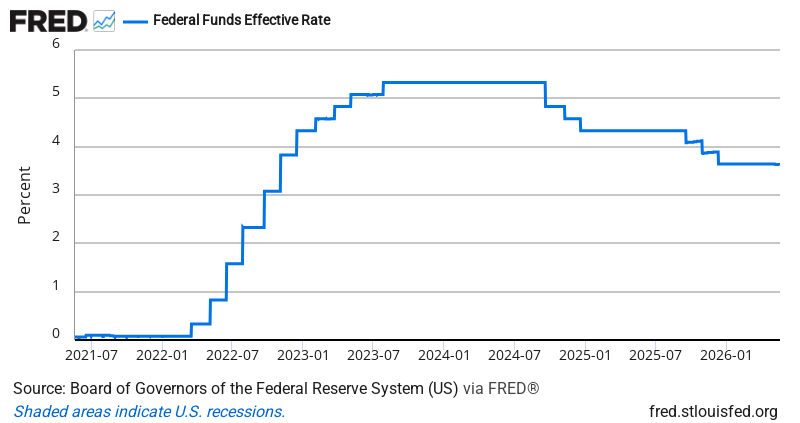
The effective federal funds rate dropped a single basis point to 3.62% Monday, the first movement in nearly a week. It’s a tiny shift, but in the current environment where every Fed move gets parsed for clues about inflation policy, even small market variations matter.
This slight dip suggests interbank lending markets are testing whether there’s any room for rates to drift lower, even as the Fed has made clear that rate cuts are off the table due to energy-driven inflation concerns. The effective rate has been holding steady in the 3.63% range since mid-May, reflecting banks’ cautious approach to overnight lending while oil prices remain elevated near $95.
The bigger story is what this stability tells us about credit conditions. When the effective rate tracks closely to the Fed’s target range, it signals normal banking system liquidity. Banks aren’t scrambling for cash, but they’re also not flooding the market with excess liquidity. That’s consistent with an economy managing through an energy shock without broader financial stress.
Many professional investors watch the gap between the effective rate and the Fed’s target for early signals about monetary policy effectiveness. When markets start pricing in rate changes before the Fed signals them, it often shows up here first. The current stability suggests investors aren’t betting on imminent Fed moves in either direction, which makes sense given the inflation uncertainty from the Hormuz closure.
Bottom Line: A single basis point move isn’t much, but the recent stability in overnight rates suggests the banking system is handling the energy shock without major stress. The real test comes if oil prices spike further or if the Fed needs to tighten to combat energy inflation.
Source: Federal Reserve Economic Data (FRED)
ON1010.com provides economic education for investors. Nothing here is investment advice. Always consult a qualified financial advisor before making investment decisions.
Free Research
The economy moves fast. We make sure you move faster.
Economic data, policy shifts, and market signals — delivered to your inbox.
Subscribe Free