
Fed Holds at 3.5%: The Pause That Signals More Than You Think
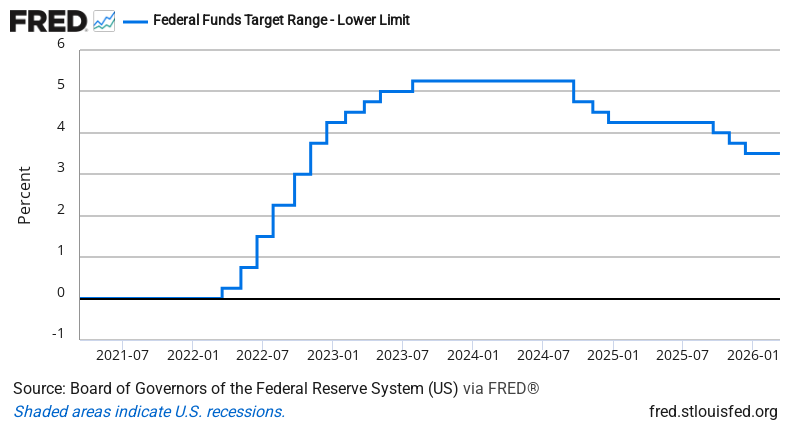
The Fed kept its target rate unchanged at 3.5% on March 11, holding steady for the sixth consecutive day. But this isn’t about what happened yesterday — it’s about what’s not happening that should have investors paying attention.
We’re now in the longest pause since the Fed finished raising rates, and that pause is revealing something important about the central bank’s confidence in the current economic setup. The Fed typically moves rates when they see imbalances building. No moves means they’re comfortable with where things stand: inflation around target, unemployment stable, and corporate profits still expanding at a 9.2% annualized pace.
The 3.5% level puts real rates (after inflation) at roughly 1.3% — tight enough to keep speculation in check but not so restrictive that it’s choking off productive investment. That sweet spot matters because we’re in the middle of an AI-driven productivity cycle that needs capital to flow to the right places. Too tight, and you starve the investment. Too loose, and you get bubbles in the wrong assets.
Here’s what professional managers are watching: the Fed’s comfort with this pause suggests they see the productivity gains as sustainable, not just a temporary sugar high. In past cycles, the Fed got nervous about keeping rates steady when corporate profits were this strong. This time, they’re not flinching — likely because those profit gains are coming from efficiency improvements rather than just price increases.
The bond market is reading this as eventual loosening ahead, but that misses the bigger picture. If productivity gains are structural, the Fed may not need to cut as aggressively as markets expect. That could keep real yields attractive for longer.
Bottom Line: A steady Fed funds rate isn’t boring policy — it’s a signal that the economic engine is running smoothly enough to let structural changes play out. The question isn’t when they’ll cut, but whether they’ll need to cut at all.
Source: Federal Reserve Economic Data (FRED)
ON1010.com provides economic education for investors. Nothing here is investment advice. Always consult a qualified financial advisor before making investment decisions.
Free Research
The economy moves fast. We make sure you move faster.
Economic data, policy shifts, and market signals — delivered to your inbox.
Subscribe Free