
Fed Holds Steady as Markets Price in Policy Shift Ahead
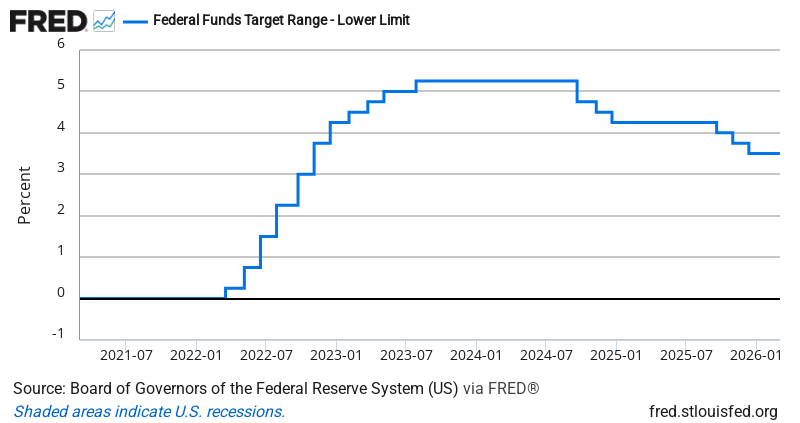
The Federal Reserve held its benchmark rate unchanged at 3.50% through early March, maintaining the same level it has held since late February. While the stability looks unremarkable on the surface, it masks a more interesting dynamic: the Fed is essentially in a holding pattern while markets increasingly price in a policy shift ahead.
The 3.50% rate represents the lower bound of the Fed’s target range, and the recent flatline reflects a central bank that has achieved its soft landing but isn’t quite ready to declare victory. With core inflation running right at the Fed’s 2.1% target and corporate profits expanding at a 9.2% annualized pace in Q4, the economic backdrop gives policymakers room to be patient.
Here’s what makes this moment particularly interesting: the Fed is holding steady while defensive sectors are crushing offensive ones by over 7 percentage points in the past month. That’s classic risk-off behavior, suggesting investors are positioning for something the data doesn’t yet show. Utilities and consumer staples leading the market typically signals either recession fears or expectations that the Fed will need to cut rates to support growth.
But the profit margin story suggests otherwise. When corporate margins are expanding at this pace, it historically leads employment and investment higher, not lower. The disconnect between defensive sector strength and expanding profit margins creates an unusual setup where the Fed’s next move becomes less obvious, not more.
Historically, investors have used these holding patterns to position for the next phase of the cycle. In environments like this, professional managers tend to focus on whether the economy is strong enough to handle current rates or weak enough to need relief.
Bottom Line: The Fed’s steady hand reflects confidence in the soft landing, but markets are pricing in change ahead — the question is whether that change comes from strength or weakness.
Source: Federal Reserve Economic Data (FRED)
ON1010.com provides economic education for investors. Nothing here is investment advice. Always consult a qualified financial advisor before making investment decisions.
Free Research
The economy moves fast. We make sure you move faster.
Economic data, policy shifts, and market signals — delivered to your inbox.
Subscribe Free