
Fed Holds Steady at 3.5% — But the Real Story Is What Comes Next
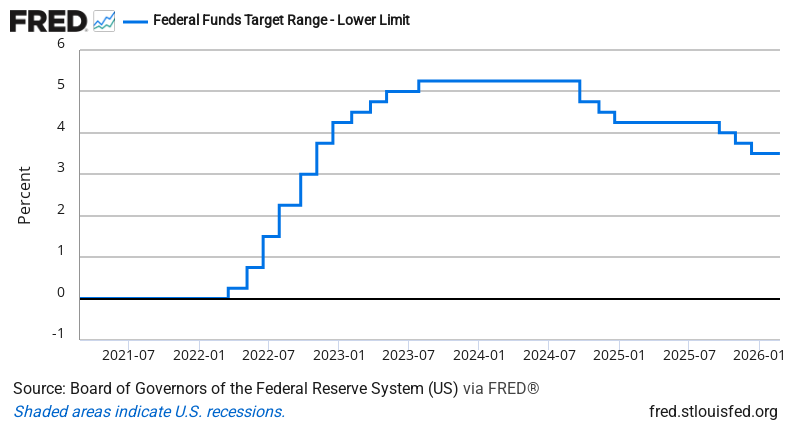
The Federal Reserve kept its target rate unchanged at 3.5% through February 23rd, marking six straight days of stability in what’s becoming a critical holding pattern for the U.S. economy.
While the headline number shows no movement, the Fed’s decision to maintain this level signals something more important: policymakers believe they’ve found the sweet spot between cooling inflation and avoiding recession. At 3.5%, borrowing costs are restrictive enough to keep price pressures in check, but not so high that they choke off business investment entirely.
This pause comes as the economy shows mixed signals elsewhere. Corporate profit margins have been holding up better than expected, suggesting businesses are adapting to higher borrowing costs rather than simply cutting back. That’s a sign of underlying resilience — when companies can maintain profitability even with elevated rates, it usually means demand remains solid and productivity improvements are offsetting higher financing costs.
Historically, when the Fed holds rates steady after a tightening cycle, it creates opportunities for quality businesses with strong cash flows and minimal debt. Many professional investors use these periods to focus on companies that can self-fund growth rather than relying on cheap credit. Fixed-income investors often view rate stability as a chance to lock in yields before the next policy shift.
Bottom Line: The Fed’s steady hand at 3.5% isn’t boring — it’s strategic positioning. The question now is whether the economy can grow into these rates, or if something forces their hand in either direction.
Source: Federal Reserve Economic Data (FRED)
ON1010.com provides economic education for investors. Nothing here is investment advice. Always consult a qualified financial advisor before making investment decisions.
Free Research
The economy moves fast. We make sure you move faster.
Economic data, policy shifts, and market signals — delivered to your inbox.
Subscribe Free