
Fed Holds Steady at 3.64% — But the Real Story Is in the Trajectory
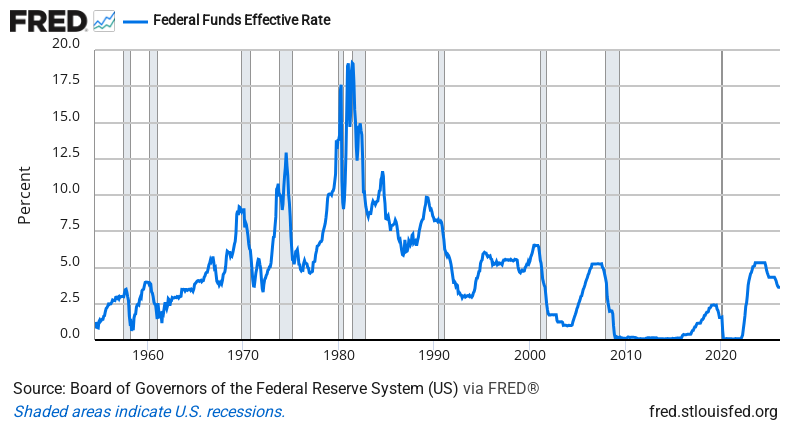
The Federal Reserve kept its benchmark rate unchanged at 3.64% for the third straight month in March, but zoom out and you see something more interesting: rates have fallen nearly 16% from their year-ago level of 4.33%.
That’s a 69 basis point drop over twelve months — the kind of sustained easing cycle that historically signals either economic weakness or mission accomplished on inflation. The Fed’s gradual descent from over 4% last fall suggests they’re threading the needle: cutting enough to support growth without reigniting price pressures. The question is whether this measured approach is working, or if they’re behind the curve.
Here’s what makes this tricky: the economy is still creating jobs and corporate margins remain healthy in many sectors, yet the Fed continues to ease. Either they see something in the forward-looking data that isn’t obvious yet, or they’re prioritizing a “soft landing” over inflation vigilance. Historically, when the Fed cuts rates while unemployment stays low, it’s either because they got inflation under control early (like the mid-90s) or because trouble is brewing beneath the surface.
In this type of environment, many professional investors tend to focus on sectors that benefit from lower borrowing costs — particularly real estate, utilities, and growth stocks that rely on cheap capital. Bond investors often position for potential further cuts, while keeping an eye on any signs that easier money is rekindling inflation expectations.
Bottom Line: Three months of stability masks a year of meaningful easing. The Fed is betting they can keep cutting without consequences — but that’s exactly when markets start pricing in the risks they might be wrong.
Source: Federal Reserve Economic Data (FRED)
ON1010.com provides economic education for investors. Nothing here is investment advice. Always consult a qualified financial advisor before making investment decisions.
Free Research
The economy moves fast. We make sure you move faster.
Economic data, policy shifts, and market signals — delivered to your inbox.
Subscribe Free