
Fed Rate Hits 3.64% as Powell’s Pivot Accelerates
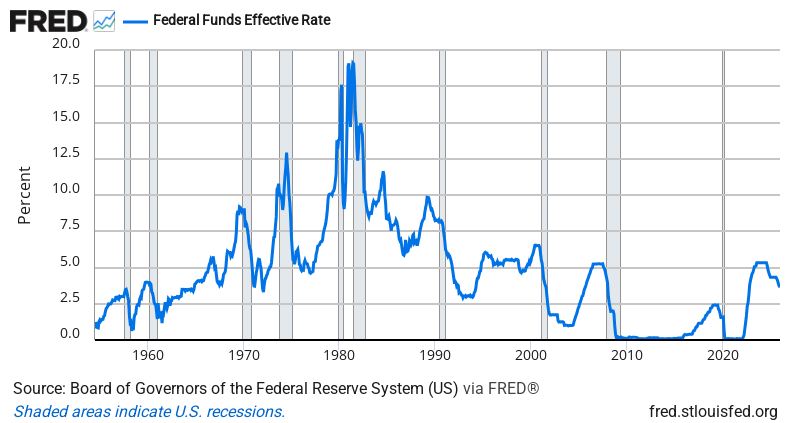
The Federal Reserve’s benchmark rate dropped to 3.64% in January, down from 3.72% in December — the sixth consecutive monthly decline as the Fed continues cutting from last year’s cycle peak of over 5%.
Here’s what’s interesting: we’re watching monetary policy shift in real-time from restrictive to neutral territory. At 3.64%, the fed funds rate is now sitting roughly 70 basis points below where it was a year ago — a 15.94% decline that signals the Fed believes it successfully tamed inflation without breaking the labor market. The pace of cuts has been methodical but consistent, falling from 4.33% in August to today’s level.
This matters because we’re approaching what many economists consider the “neutral rate” — the Goldilocks zone where monetary policy neither stimulates nor restricts growth. Historical data suggests neutral sits somewhere between 2.5-4.0%, meaning we’re likely in the final innings of this cutting cycle. The Fed appears to be engineering the soft landing everyone hoped for: inflation cooling toward 2% while unemployment remains historically low.
Many professional investors are positioning for this transition by rotating toward interest-sensitive sectors like utilities and real estate, which tend to outperform as rates stabilize. Bond investors are watching closely too — when the Fed approaches neutral, longer-term rates often become more attractive than short-term paper. Historically, this environment has favored dividend-paying stocks over pure growth plays.
Bottom Line: The Fed is threading the needle between cutting enough to support growth but not so much that it reignites inflation. The next few months will tell us whether they stick the landing.
Source: Federal Reserve Economic Data (FRED)
ON1010.com provides economic education for investors. Nothing here is investment advice. Always consult a qualified financial advisor before making investment decisions.
Free Research
The economy moves fast. We make sure you move faster.
Economic data, policy shifts, and market signals — delivered to your inbox.
Subscribe Free