
Fed Rate Stays Frozen While Real Borrowing Costs Keep Falling
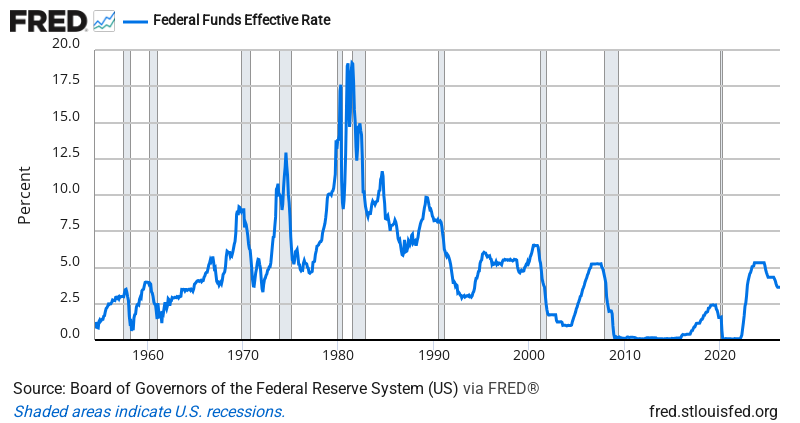
The Federal Reserve held its benchmark rate steady at 3.64% in April, marking four straight months without a move. But here’s what’s more interesting: real interest rates — what borrowers actually pay after accounting for inflation — have been quietly declining as price pressures ease.
The Fed funds rate has now dropped 69 basis points over the past year, down from 4.33% in April 2025. That’s a meaningful shift in monetary policy stance, even if the central bank has paused recently. The bigger story is in what’s happening beneath the surface: as inflation moderates faster than rate cuts, the real cost of capital is shrinking. This creates a stealth stimulus effect that doesn’t require any dramatic Fed announcements.
This environment historically sets up well for business investment decisions. When real borrowing costs fall, companies find more projects that clear their hurdle rates for profitability. We’re seeing early signs of this in recent capital expenditure data and business lending surveys. The productivity investments that drove the late-1990s expansion happened in exactly this type of rate environment — falling real rates combined with technological opportunity.
Many professional investors view stable-to-declining real rates as supportive for risk assets, particularly growth stocks that benefit from lower discount rates on future cash flows. Historically, this setup has also been favorable for credit markets, as borrowing conditions improve while default risks remain manageable in a steady economy.
Bottom Line: The Fed may be on pause, but monetary conditions are still loosening through the back door. Smart money is watching real rates, not just the headline number.
Source: Federal Reserve Economic Data (FRED)
ON1010.com provides economic education for investors. Nothing here is investment advice. Always consult a qualified financial advisor before making investment decisions.
Free Research
The economy moves fast. We make sure you move faster.
Economic data, policy shifts, and market signals — delivered to your inbox.
Subscribe Free