
Fed’s Inflation Gauge Ticks Higher Despite October’s Calm
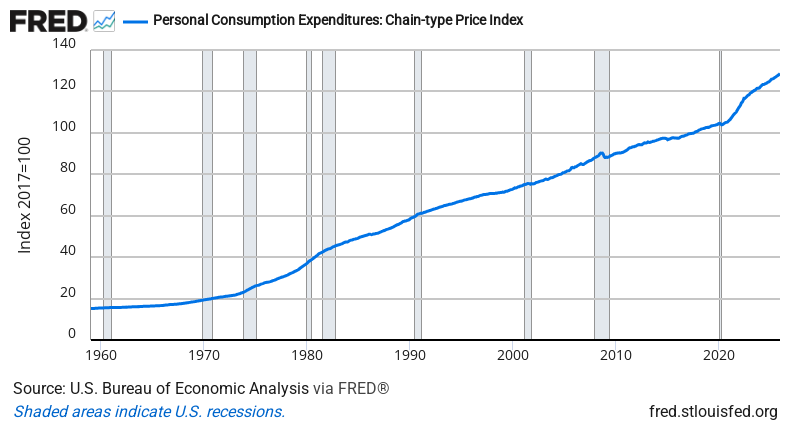
The Fed’s preferred inflation measure rose 0.36% in November after a modest 0.20% gain in October, pushing the year-over-year rate to 2.13% — still comfortably near the central bank’s 2% target but showing renewed monthly momentum.
Here’s the tension: November’s uptick breaks a three-month streak of cooling monthly readings that had inflation hawks cautiously optimistic. The 0.36% monthly gain is the largest since July, when PCE jumped 0.21%. It’s not alarming, but it’s enough to remind everyone that the path back to price stability isn’t a straight line downward.
The bigger picture remains encouraging for the Fed’s disinflatation story. At 2.13% year-over-year, PCE is running right where policymakers want it — close enough to 2% to declare mission accomplished, but not so low as to trigger deflation fears. This reading supports the Fed’s current “hold and watch” approach rather than aggressive rate cuts. Compare this to early 2022 when PCE was running north of 6%, and the progress is undeniable.
For portfolios, this type of environment — low but slightly volatile inflation — historically keeps investors focused on quality growth stocks and shorter-duration bonds. Many professional traders view this as a Goldilocks scenario: inflation controlled enough to avoid aggressive Fed tightening, but not so subdued that it signals economic weakness. The key question becomes whether November’s uptick is seasonal noise or the beginning of stickier price pressures.
Bottom Line: Inflation remains well-behaved at 2.13% annually, but November’s monthly acceleration reminds us why the Fed isn’t rushing to cut rates aggressively. The trend is still your friend, but it’s worth watching whether this uptick has legs.
Source: Federal Reserve Economic Data (FRED)
ON1010.com provides economic education for investors. Nothing here is investment advice. Always consult a qualified financial advisor before making investment decisions.
Free Research
The economy moves fast. We make sure you move faster.
Economic data, policy shifts, and market signals — delivered to your inbox.
Subscribe Free