
Housing Starts Cool Despite Solid Growth Trajectory
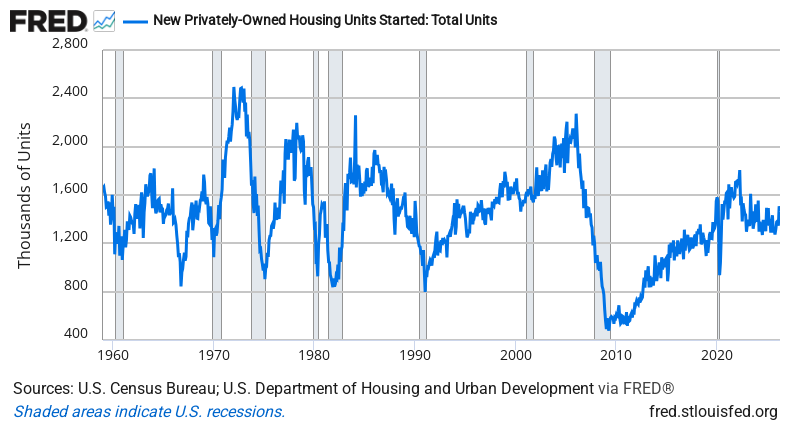
Housing starts dropped 2.8% in April to 1.465 million units, snapping March’s strong bounce but still running 6.2% ahead of last year. The pullback looks more like builders catching their breath than a demand problem — starts are still up nearly 400,000 units from the November trough.
The bigger story is how housing has held up despite the energy shock. Construction costs have jumped with oil near $95, yet builders keep breaking ground at a pace that would deliver nearly 1.5 million new homes annually. That suggests underlying demand remains strong enough to absorb higher input costs — a sign the consumer isn’t as stretched as some feared. The four-month trend since December shows starts averaging around 1.42 million, well above the 1.3 million pace that defined most of 2025.
This resilience matters for the Fed’s inflation calculus. Housing investment drives job creation across multiple sectors — construction, materials, appliances, furniture. When builders stay active despite cost pressures, it keeps the labor market tight and supports wage growth. Historically, sustained housing activity above 1.4 million units has coincided with steady GDP growth and manageable inflation, even during energy price spikes.
Many professional investors view housing data as a leading indicator for consumer durables and regional bank lending. In this type of environment, where energy costs are elevated but domestic activity remains solid, investors often look toward homebuilding stocks and materials companies that can pass through cost increases. REITs focused on single-family rentals also tend to benefit when new supply growth is steady but not excessive.
Bottom Line: Housing starts may be cooling from March highs, but the underlying trend still points to a construction sector that’s finding ways to build through higher costs — exactly what you want to see if the economy is going to absorb the energy shock without stalling.
Source: Federal Reserve Economic Data (FRED)
ON1010.com provides economic education for investors. Nothing here is investment advice. Always consult a qualified financial advisor before making investment decisions.
Free Research
The economy moves fast. We make sure you move faster.
Economic data, policy shifts, and market signals — delivered to your inbox.
Subscribe Free