
Inflation Expectations Creep Higher as Markets Test the Fed’s Resolve
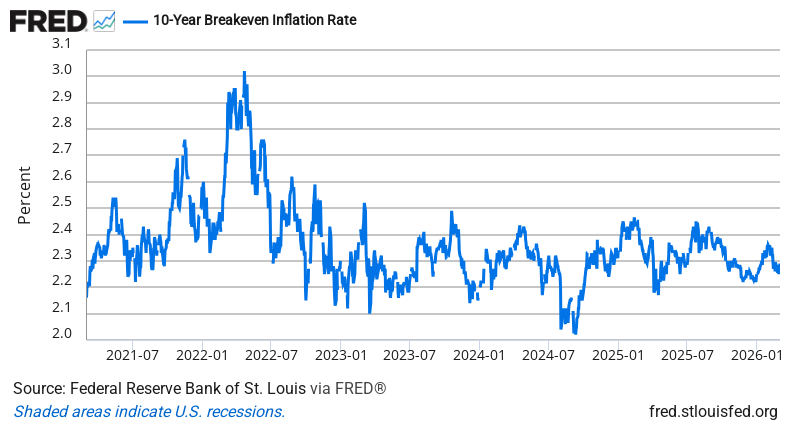
The 10-year breakeven inflation rate ticked up to 2.29% on March 2nd, rising 0.04 percentage points from the previous reading of 2.25%. That puts market expectations for long-term inflation squarely above the Fed’s 2% target for the fifth straight session, with breakevens hovering in the 2.25% to 2.29% range all week.
Here’s what makes this move more interesting than it looks: inflation expectations are climbing even as defensive sectors are crushing offensive ones. Money is rotating into utilities and consumer staples while simultaneously pricing in higher future inflation. That’s not the usual pattern.
Normally, when investors flee to defensive sectors (as they have been, with utilities up 10.2% versus the S&P 500 this month), it signals worry about economic weakness and falling inflation expectations. But breakevens are doing the opposite. This suggests markets are pricing in a specific type of risk: policy-driven inflation that persists even if growth slows.
The 2.29% reading puts us at levels last seen consistently during the early stages of the 2021-2022 inflation surge. Back then, breakevens spent months above 2.5% as markets realized the Fed was behind the curve. We’re not there yet, but the direction matters more than the level.
Professional bond managers are asking the right question: is this a temporary blip from tariff noise, or are we seeing the early stages of a more persistent inflation problem? The productivity gains from AI investment should be structurally deflationary over time. But in the near term, trade policy complexity and government spending dynamics create genuine uncertainty about the inflation path.
Bottom Line: When defensive rotation meets rising inflation expectations, it suggests markets are pricing in stagflationary risks rather than clean disinflation. That’s a much trickier environment for the Fed to navigate.
Source: Federal Reserve Economic Data (FRED)
ON1010.com provides economic education for investors. Nothing here is investment advice. Always consult a qualified financial advisor before making investment decisions.
Free Research
The economy moves fast. We make sure you move faster.
Economic data, policy shifts, and market signals — delivered to your inbox.
Subscribe Free