
Inflation Expectations Flat Despite Oil Crisis
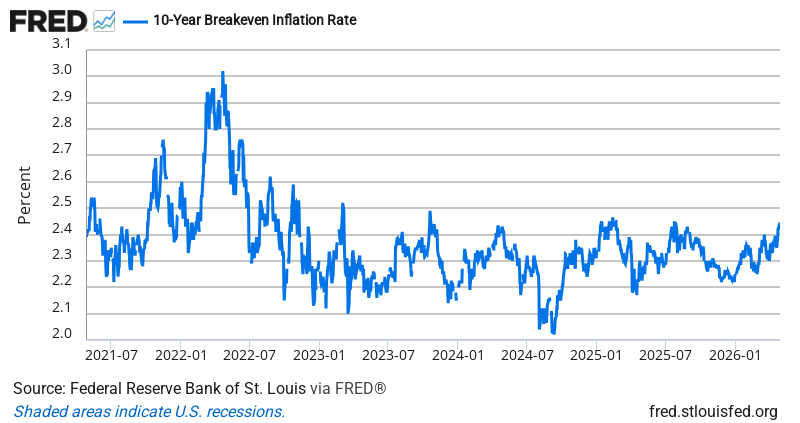
Bond markets are sending a curious signal: despite crude oil surging nearly 50% since February, long-term inflation expectations remain stubbornly anchored at 2.44%.
The 10-year breakeven inflation rate — the market’s bet on average price growth over the next decade — has barely budged over the past week, holding steady at 2.44%. That’s remarkable given the backdrop: the Strait of Hormuz has been closed since late February following U.S.-Israel strikes on Iran, sending WTI crude from $66 to $95 per barrel.
Here’s the puzzle bond traders seem to be working through. Yes, energy shocks typically feed through to broader prices — every sustained 10% oil premium historically adds about 0.6% to headline inflation. But markets may be pricing in two offsetting forces: the inflationary impact of higher energy costs versus the deflationary pressure from economic slowdown in energy-dependent regions like Japan and South Korea. Meanwhile, the U.S. benefits as a net energy exporter, and lower tariffs (down from 20% to 10%) plus larger tax refunds provide some consumer relief.
The flat breakeven rate suggests investors expect this energy shock to be more cyclical than structural. Bond markets are essentially betting that once the Strait reopens — or strategic reserves provide enough supply cushion — oil prices normalize and inflation expectations revert to the Fed’s 2% target range.
Many professional investors view stable long-term breakevens as a signal to focus on duration positioning rather than inflation hedges. Historically, when breakevens remain anchored during energy shocks, real yields become the primary driver of bond returns. Some are watching whether this stability holds if monthly CPI prints start showing 1-handle increases.
Bottom Line: Bond markets are pricing in transitory energy inflation, not a return to 1970s-style persistent price spirals. If they’re wrong, and oil stays elevated longer than expected, that 2.44% could move fast.
Source: Federal Reserve Economic Data (FRED)
ON1010.com provides economic education for investors. Nothing here is investment advice. Always consult a qualified financial advisor before making investment decisions.
Free Research
The economy moves fast. We make sure you move faster.
Economic data, policy shifts, and market signals — delivered to your inbox.
Subscribe Free