
Inflation Expectations Flatline As Markets Digest Energy Reality
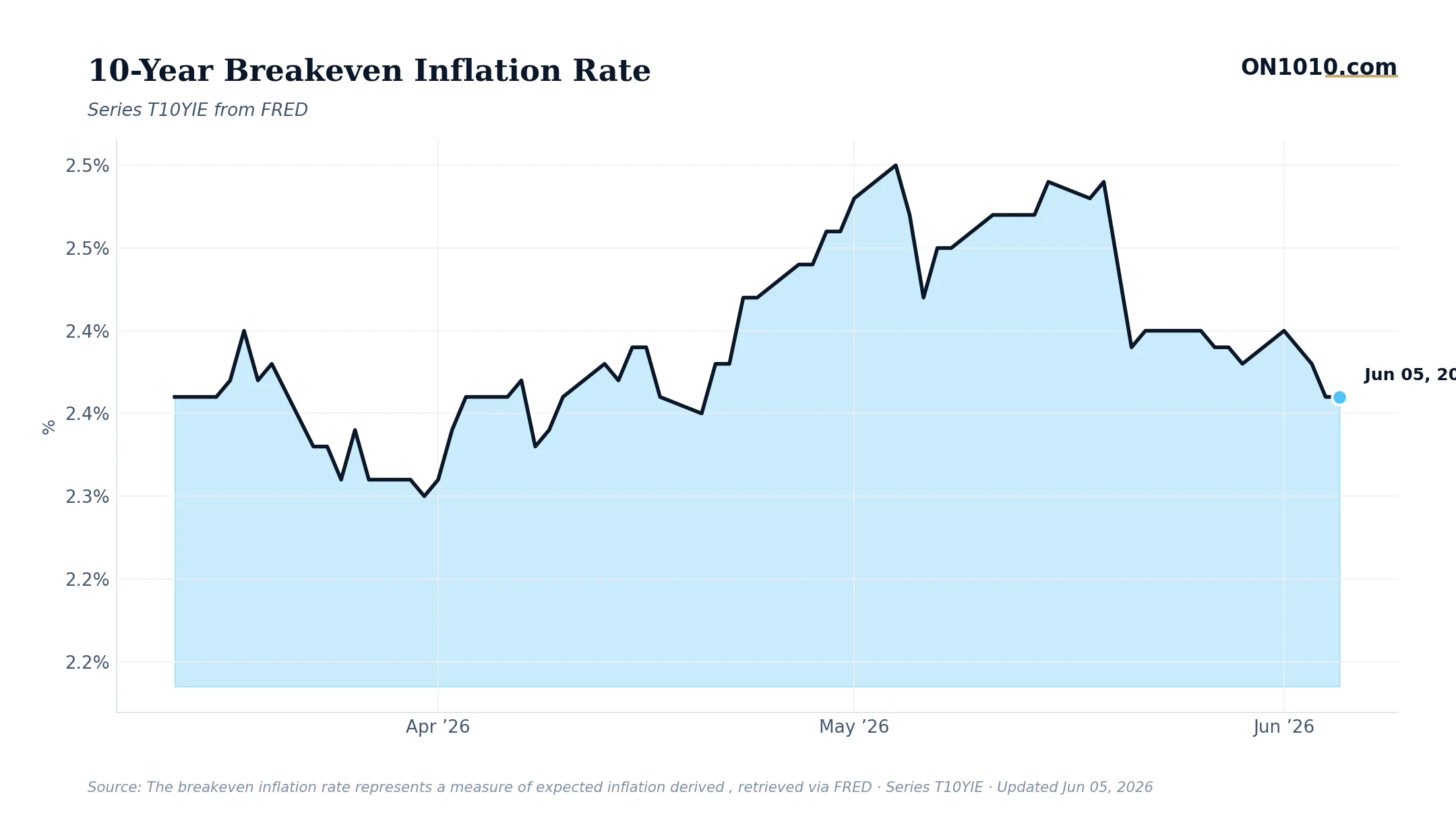
Bond traders aren’t blinking. The 10-year breakeven inflation rate held steady at 2.36% this week, unchanged from Thursday and down from 2.40% just five days ago. That’s remarkable restraint for a market pricing decade-long inflation expectations while oil trades near $95, a 44% premium from pre-crisis levels.
The flatline tells a story about how markets are processing the Strait of Hormuz closure. Yes, energy prices spiked. But bond traders seem to be betting this is a supply shock, not a structural inflation shift. The modest decline from 2.40% to 2.36% over five trading days suggests investors expect the Federal Reserve to act aggressively if energy inflation spreads to core goods and services. That’s a vote of confidence in Fed credibility, even as rate cuts have moved off the table.
This reading sits right at the Fed’s 2% target plus a small risk premium, exactly where you’d expect if markets believe the central bank can contain second-round inflation effects. The challenge: every sustained 10% oil premium historically adds about 0.6% to headline CPI, and monthly prints with a 1-handle are now possible. The question is whether wage and rent dynamics stay anchored while energy works through the system.
Historically, this type of setup, energy-driven inflation expectations that stay relatively contained, has meant markets are pricing temporary disruption rather than regime change. Investors have typically watched whether inflation expectations start climbing above 2.5% as the signal that energy shocks are becoming embedded in broader price dynamics. The real test comes in the next few CPI prints.
Bottom Line: Bond traders are betting the Fed can keep this energy shock from becoming an inflation spiral. If they’re right, this stays a supply story. If breakevens start climbing toward 3%, it becomes a monetary story.
Source: Federal Reserve Economic Data (FRED)
ON1010 Research is an independent publisher of economic education and is not a registered investment adviser, broker-dealer, or investment company. This content is for educational and informational purposes only and is not investment advice or a recommendation to buy, sell, or hold any security. Published under the publisher exemption recognized by Section 202(a)(11)(D) of the Investment Advisers Act of 1940 (Lowe v. SEC). Always consult a qualified financial professional before making any financial decision.
Free Research
The economy moves fast. We make sure you move faster.
Economic data, policy shifts, and market signals — delivered to your inbox.
Subscribe Free