
Inflation Expectations Hold Steady as Markets Parse Energy Shock Impact
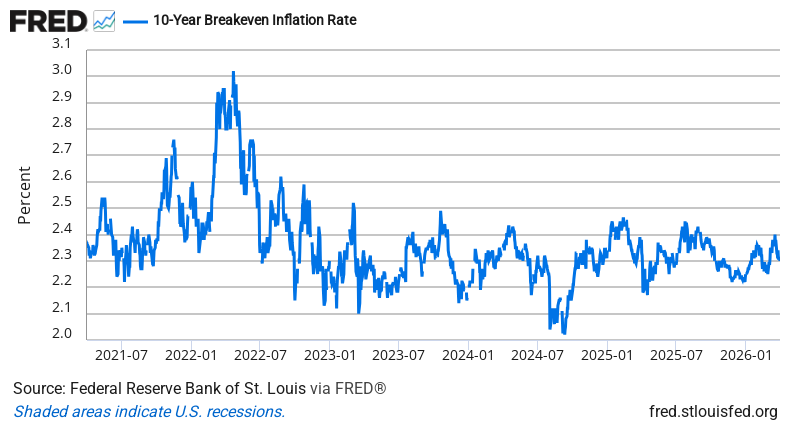
The 10-year breakeven inflation rate ticked up just 1 basis point to 2.31% yesterday — a remarkably calm response given oil prices have spiked from $66 to $95 since the Strait of Hormuz closure in late February. Bond markets are essentially saying: yes, energy prices are elevated, but we still expect inflation to average around the Fed’s 2% target over the next decade.
This stability is notable because every sustained 10% oil premium typically adds about 0.6% to near-term inflation readings. With crude up 44% from pre-crisis levels, monthly CPI prints could easily hit the 1-handle in coming months. Yet long-term inflation expectations remain anchored near 2.3% — suggesting investors view the current energy shock as temporary, not a structural shift toward persistent inflation.
The question is whether that confidence is justified. The US benefits from being a net energy exporter, so higher oil prices create some offsetting income effects. Lower tariffs (down from 20% to 10% after IEEPA was struck down) and larger OBBB tax refunds also provide consumer relief. But if the Strait remains closed much longer, or if the energy shock starts feeding into broader price pressures, that 2.3% anchor could start drifting higher.
Historically, when breakeven rates hold steady despite commodity spikes, many professional investors focus on sectors that benefit from higher energy prices while avoiding energy-intensive industries facing margin compression. TIPS (Treasury Inflation-Protected Securities) also tend to come into focus as a hedge against the risk that inflation expectations eventually catch up to energy reality.
Bottom Line: Markets are betting the oil shock stays temporary — but if breakevens start climbing above 2.5%, it signals investors are losing faith in that narrative.
Source: Federal Reserve Economic Data (FRED)
ON1010.com provides economic education for investors. Nothing here is investment advice. Always consult a qualified financial advisor before making investment decisions.
Free Research
The economy moves fast. We make sure you move faster.
Economic data, policy shifts, and market signals — delivered to your inbox.
Subscribe Free